


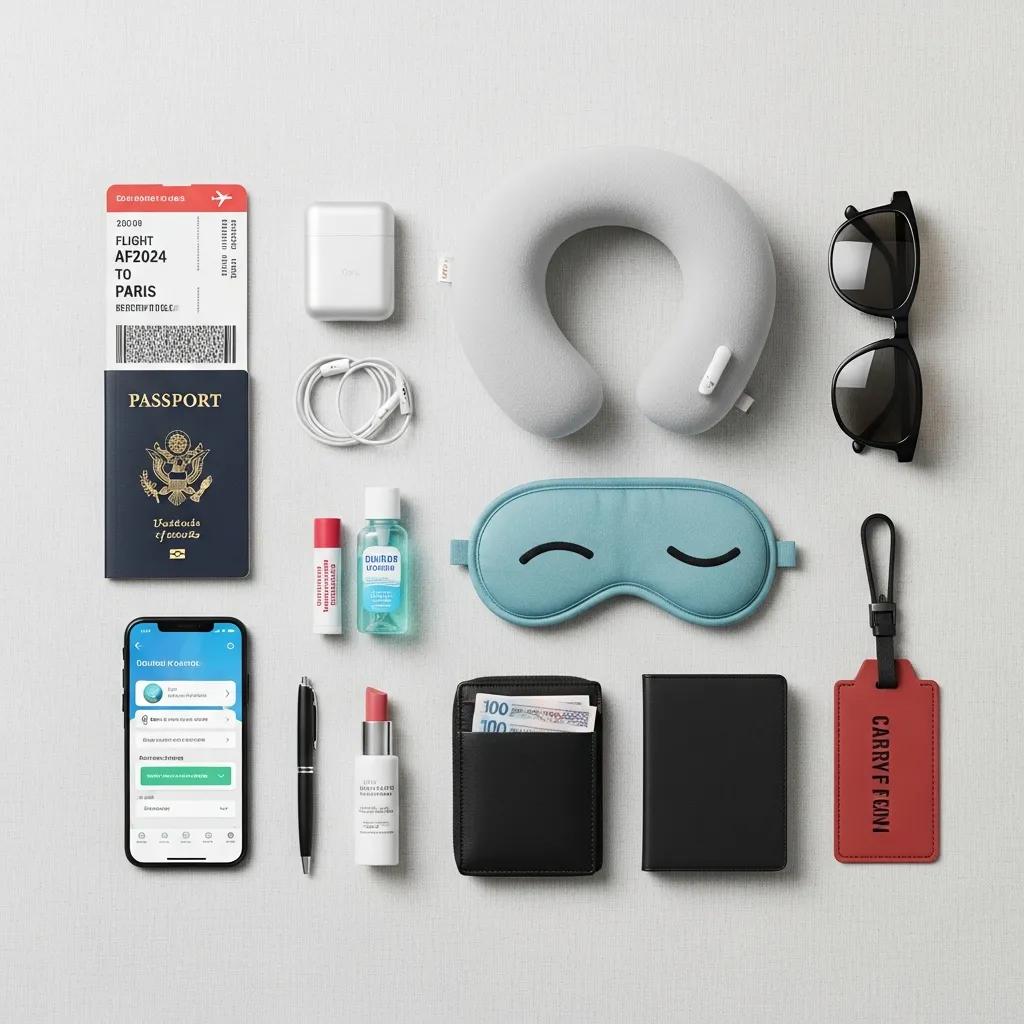
Airport travel essentials include the right documents, a well-planned carry-on packing list for stress-free travel, airport security tips, and in-flight comfort items like noise-cancelling headphones and compression socks. Preparation before you fly—not at the departure gate—is what separates a smooth journey from a stressful one.
Flying should be exciting. A new destination, a fresh experience, a well-earned trip. But somewhere between the traffic to the terminal and the scramble through security, the excitement can drain fast. The good news? Most airport stress is entirely preventable—and it comes down to having the right airport travel essentials in place before you leave home.
This guide covers everything a modern traveler needs: from pre-flight document prep and smart packing strategies to navigating biometric screening, breezing through security, and staying comfortable at 35,000 feet. Whether you’re a first-time flyer or a seasoned road warrior who’s clocked more miles than you can count, there’s something in here for you.
By the time you finish reading, you’ll have a clear, actionable plan for every stage of your journey—from curb to customs.
I. Why Airport Travel Essentials Matter More Than You Think
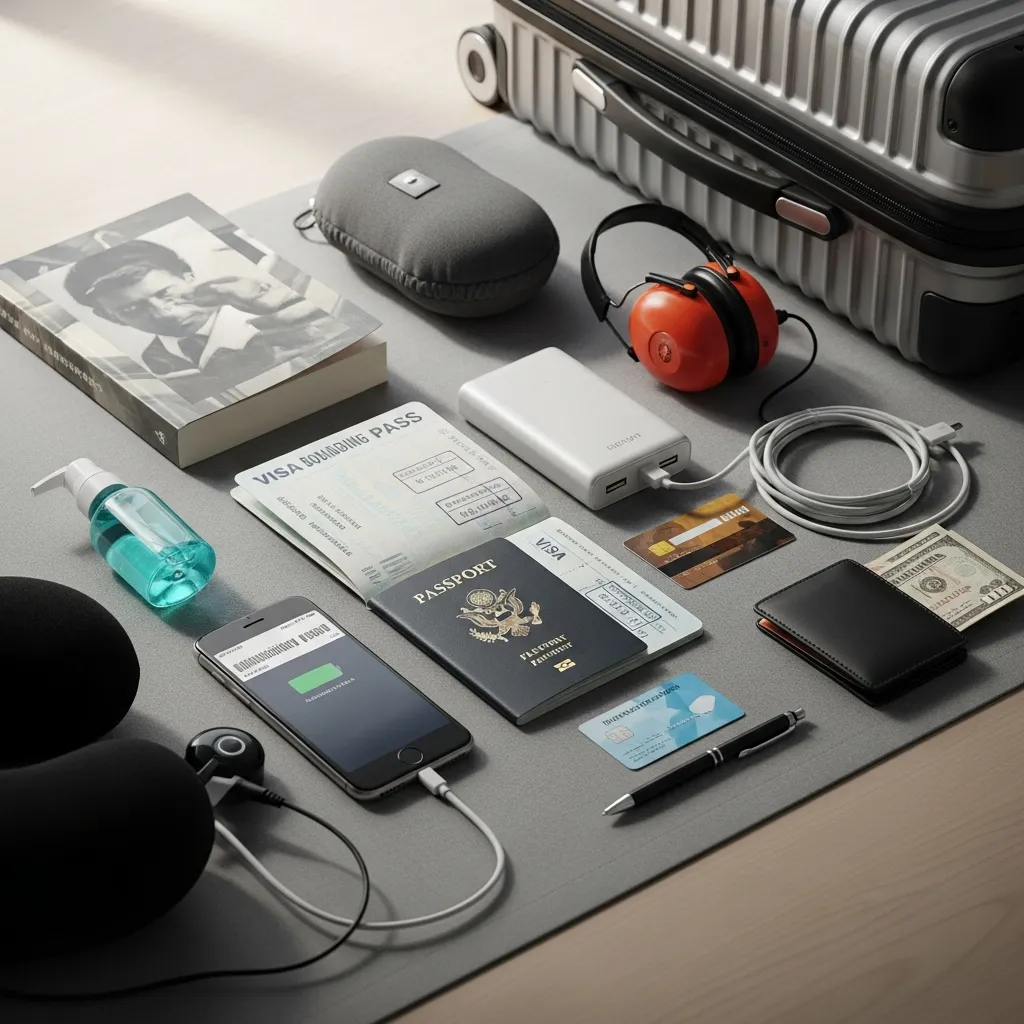
Most travel headaches are self-inflicted. Forgotten documents, overstuffed bags, unfamiliar screening procedures—these aren’t bad luck, they’re gaps in preparation. Airport travel essentials aren’t just a packing checklist; they represent a mindset. Organized travelers move faster, stress less, and actually enjoy the experience of getting from A to B.
Airports have also changed dramatically over the last decade. What was once a chaotic maze of printed boarding passes and long queues has evolved into a tech-forward environment built around speed and convenience—if you know how to use it. Mobile check-in, digital wallets, biometric gates, and expedited screening programs have collectively transformed the airport experience. But only for travelers who come prepared.
II. Pre-Flight Preparation: Setting the Stage for a Smooth Journey
What documents and digital tools do you need before flying?
Identification and Ticketing
Start with the non-negotiables: a valid government-issued ID or passport, your boarding pass (digital or printed), and any visas required for your destination. For international travel, always check visa requirements at least 4–6 weeks in advance. Some destinations also require proof of onward travel or accommodation bookings at customs.
Beyond the physical documents, your phone is now one of your most critical airport travel essentials. Digital boarding passes stored in Apple Wallet or Google Pay eliminate the panic of a crumpled paper printout. Airlines like Delta, United, and Southwest all support mobile boarding passes through their apps.
Essential Apps and Digital Wallets
Before any trip, install or update the following:
- Your airline’s app (for real-time flight updates and mobile boarding)
- Google Maps or Apple Maps with offline maps downloaded
- A currency conversion app if traveling internationally
- A VPN for secure use of public airport Wi-Fi
How do you build a carry-on packing list for stress-free travel?
Carry-On vs. Checked: Making the Right Choice
The single best decision most travelers can make is committing to carry-on only. Checked luggage adds time, cost, and the very real risk of delayed or lost bags. For trips under two weeks, a well-organized 40L carry-on and a personal item can hold more than you’d expect—especially with packing cubes.
That said, some trips demand checked luggage. Beach vacations with bulky gear, ski trips, or long-term stays all have legitimate reasons to check a bag. The key is making that decision consciously, not by default.
The Essentials: What Absolutely Must Come Aboard
Your carry-on packing list for stress-free travel should always include:
- Passport/ID and travel documents (in an easy-access pouch)
- Phone charger and a portable power bank (10,000mAh minimum)
- Noise-cancelling headphones or earbuds
- A reusable water bottle (empty before security, fill after)
- A light layer—planes get cold, often unexpectedly
- Any prescription medications in their original labeled containers
- A basic hygiene kit (within TSA liquid limits)
- Snacks that will survive a delayed connection
These airport travel essentials aren’t just conveniences—they’re the difference between a tolerable delay and a miserable one.
Travel Pillow Alternatives: Comfort Without Bulk
Traditional U-shaped neck pillows are bulky and awkward to carry. Fortunately, several travel pillow alternatives offer equal or better comfort with a fraction of the space. The Trtl Pillow wraps around the neck and compresses to the size of a scarf. Inflatable pillows like the Therm-a-Rest Compressible Neck Pillow pack down almost flat. Some travelers swear by a rolled hoodie secured with a packing strap as the ultimate carry-on-friendly travel pillow alternative. The best option depends on how you sleep on planes—side sleepers typically prefer the Trtl, while those who lean forward do better with inflatable options.
III. Navigating the Airport: From Curb to Gate

What is airport biometric screening and how does it affect travelers?
Understanding Airport Biometric Screening
Airport biometric technology uses physical identifiers—most commonly facial recognition—to verify a traveler’s identity faster and more accurately than manual document checks. In the U.S., the Transportation Security Administration (TSA) and Customs and Border Protection (CBP) have deployed biometric airport screening at dozens of major airports, including Hartsfield-Jackson Atlanta, Dallas/Fort Worth, and Los Angeles International.
For international arrivals, airport biometric gates can clear travelers through customs in under 30 seconds—compared to several minutes at a staffed booth.
Pros and Cons for Travelers
The case for airport biometric screening is largely about speed and convenience. Participating travelers can skip document checks and move through dedicated lanes. The primary concern for many is data privacy. CBP states that biometric data collected from U.S. citizens is deleted within 12 hours, though this policy varies by country for international airports.
Travelers who prefer to opt out of airport biometric screening can typically request a manual check instead—this option remains available at all U.S. airports currently using the technology.
What are the best airport security tips for getting through checkpoints quickly?
Security is where unprepared travelers lose the most time. The good news: most checkpoint delays are avoidable.
What to Expect: Liquids, Laptops, and More
The TSA’s 3-1-1 rule governs liquids in carry-on bags: containers must be 3.4 ounces (100ml) or less, all fitting in one 1-quart clear zip-top bag, with one bag per passenger. Laptops and tablets must be removed from bags and placed in a separate bin unless you have TSA PreCheck. Shoes, belts, and bulky jackets also come off in standard lanes.
One of the most effective airport security tips is wearing slip-on shoes and keeping electronics in an easily accessible outer pocket of your bag. This alone can cut your bin-loading time in half.
Expedited Screening Programs: TSA PreCheck and Global Entry
TSA PreCheck costs $85 for a 5-year membership and allows travelers to move through dedicated lanes without removing shoes, laptops, or liquids. Global Entry ($120 for 5 years) includes TSA PreCheck and adds expedited U.S. customs clearance for international arrivals. Both programs require an application, background check, and brief in-person interview. For frequent flyers, the ROI on these airport security tips is immediate—most members recoup the cost in time savings on their first two or three trips.
How can travelers stay connected at airports?
Staying connected is one of the overlooked airport travel essentials. Most major airports offer free Wi-Fi, but speeds vary widely. For sensitive tasks—banking, work VPNs, anything involving personal data—use a VPN on public networks.
Charging stations are increasingly common in airports, but availability isn’t guaranteed near your gate. A portable power bank (listed in your carry-on packing list for stress-free travel) removes this variable entirely. USB-C power banks that support fast charging are the current standard worth investing in.
IV. In-Flight Comfort: Making the Journey Enjoyable
What are the most important airplane travel essentials for long flights?
Long-haul flights are a category of their own. Your airplane travel essentials list needs to go beyond the basics if you’re spending 8+ hours in a pressurized cabin.
Entertainment: Devices, Books, and Podcasts
Download content before you board—streaming services like Netflix, Spotify, and Audible all allow offline downloads. In-flight Wi-Fi exists but remains inconsistent and expensive on most carriers. A Kindle or e-reader is among the most underrated airplane travel essentials: lightweight, long battery life, and capable of holding an entire library.
Hydration and Snacks: Fueling Your Flight
Cabin humidity typically sits between 10–20%, significantly lower than the 30–60% most people experience on the ground. This accelerates dehydration. Aim to drink at least 8 ounces of water per hour of flight. Avoid excessive alcohol or caffeine, both of which compound dehydration at altitude.
For snacks, your best airplane travel essentials include:
- Mixed nuts or trail mix (calorie-dense, non-perishable)
- Protein bars (look for options under 200 calories with low sugar)
- Dried fruit
- Crackers and nut butter packets
Avoid anything with a strong smell out of courtesy to fellow passengers, and steer clear of heavily processed, salty snacks that will worsen dehydration.
Health and Hygiene: Staying Fresh
A small hygiene pouch is one of the most practical airplane travel essentials, particularly on overnight or long-haul flights. Include: a travel-size toothbrush and toothpaste, facial wipes, hand sanitizer, lip balm, and a basic moisturizer. Pressurized cabin air dries out skin quickly, and a quick freshen-up before landing makes a real difference in how you feel on arrival.
Do noise-cancelling headphones make a real difference on flights?
Yes—and the data backs it up. Cabin noise on a commercial aircraft typically hovers around 85 decibels, a level that causes auditory fatigue after extended exposure. Noise-cancelling headphones from brands like Sony (WH-1000XM5), Bose (QuietComfort 45), and Apple (AirPods Pro 2) use active noise cancellation (ANC) to reduce ambient engine noise by 20–30 decibels.
Beyond protecting your hearing, noise-cancelling headphones improve sleep quality on flights, reduce mental fatigue, and make entertainment sound dramatically better. For frequent flyers, they rank among the top airplane travel essentials worth a genuine investment.
Compression Socks and Movement: Preventing Aches
Deep vein thrombosis (DVT) is a genuine risk on long-haul flights. Compression socks—particularly graduated compression socks with 15–20 mmHg pressure—improve circulation during extended periods of sitting. Beyond socks, aim to stand and walk the aisle every 60–90 minutes, and do simple ankle rotations while seated.
V. Arrival and Beyond: Seamless Transitions
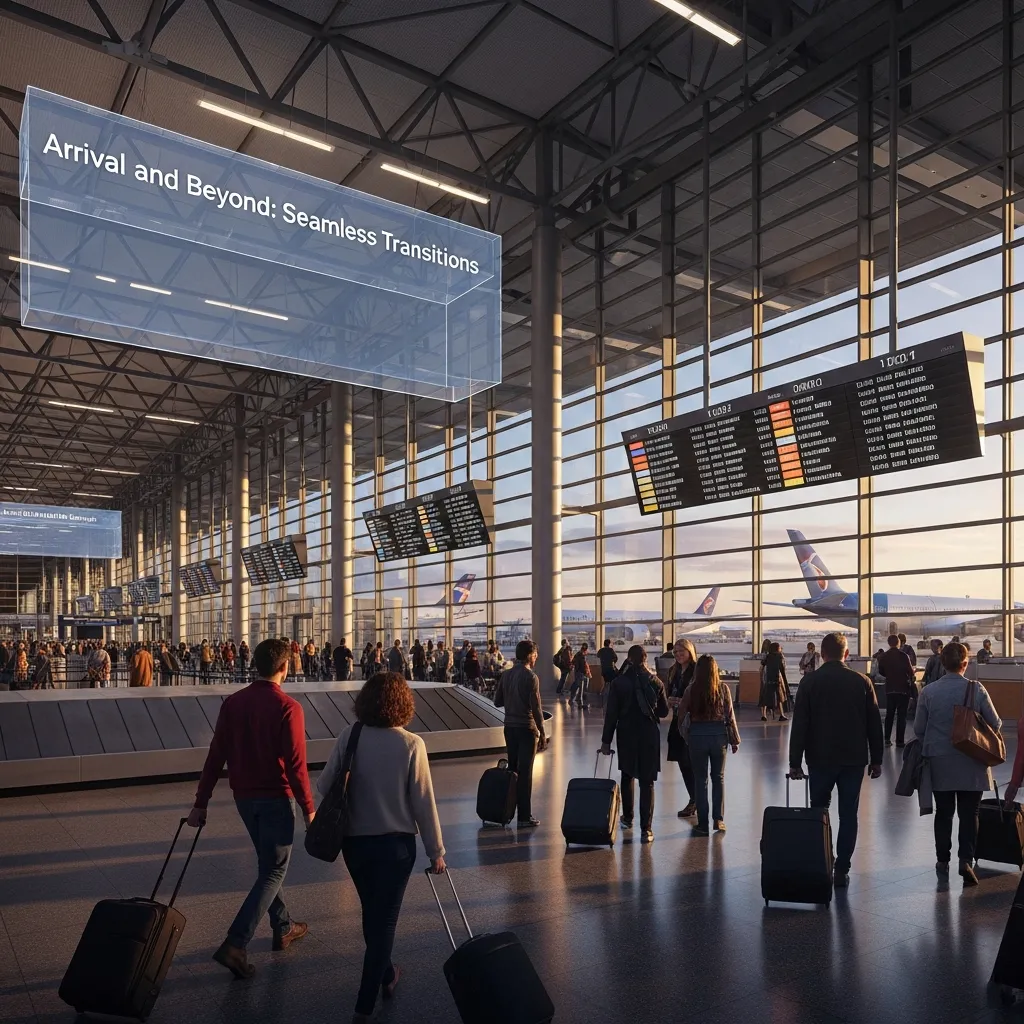
How do you navigate customs and immigration efficiently?
Customs and immigration are the final checkpoint—and the one most travelers are least prepared for. For U.S. citizens returning home, the CBP Mobile Passport Control app (free) or Global Entry kiosk can cut wait times significantly. International travelers should have their customs declaration forms completed before landing when paper versions are required.
Keep your arrival card, boarding pass, and passport accessible—not buried in a carry-on. Immigration officers will ask to see all three at most international ports of entry.
Ground Transportation: Your Next Steps
Research ground transportation before you land, not after. Options vary significantly by airport and destination: ride-share apps, pre-booked private transfers, airport rail links, or car rentals each suit different scenarios. For city-center destinations, rail is often the fastest and most cost-effective option. For suburban hotels or remote destinations, a pre-booked transfer eliminates the uncertainty of surge pricing.
Conclusion: Mastering Your Airport Experience
Great travel isn’t about luck—it’s about preparation. The airport travel essentials outlined in this guide give you a clear framework for every stage of the journey: pre-flight documentation and a well-built carry-on packing list for stress-free travel, confident navigation through airport biometric screening and security checkpoints, and the right airplane travel essentials to stay comfortable from takeoff to touchdown.
Start small if you’re building new habits. Enroll in TSA PreCheck. Download your airline’s app. Pack a power bank. Try one of the travel pillow alternatives listed here. Each individual improvement compounds, and over a handful of trips, the difference becomes profound.
The airport doesn’t have to be the worst part of your journey. With the right airport travel essentials, it can simply be the beginning of a great one.
Frequently Asked Questions About Airport Travel Essentials
1. What are the absolute must-have airport travel essentials for any trip?
The most important airport travel essentials include a valid ID or passport, a boarding pass, a portable power bank, noise-cancelling headphones or earbuds, a reusable water bottle, a light jacket, required medications, and a compact hygiene kit. These airport travel essentials help ensure a comfortable, organized, and stress-free airport experience.
2. How can I make my carry-on packing more efficient for a stress-free experience?
A smart carry-on packing strategy is one of the best airport travel essentials. Use packing cubes, pack versatile clothing, place heavier items near the wheels, and keep documents, chargers, and snacks within easy reach. Efficient packing makes airport security and boarding much easier.
3. Are there good travel pillow alternatives if I don’t like traditional neck pillows?
Yes. Comfortable airport travel essentials don’t always include a standard neck pillow. Popular alternatives include the Trtl Pillow, Bcozzy Chin-Supporting Pillow, inflatable travel pillows, or even a rolled-up hoodie for lightweight neck support during flights.
4. What should I know about airport biometric screening before I travel?
Understanding airport biometric screening is becoming an important part of modern airport travel essentials. Facial recognition is used at many airports for identity verification, and U.S. citizens can usually request a manual document check instead.
5. What are the best airport security tips for getting through checkpoints quickly?
Essential airport travel essentials include wearing slip-on shoes, following the 3-1-1 liquids rule, keeping electronics accessible, and avoiding bulky accessories. Programs like TSA PreCheck and Global Entry can also help speed up security screening.
6. What are the best airplane travel essentials for long-haul flights?
For long-haul flights, your airport travel essentials should include noise-cancelling headphones, compression socks, a sleep mask, hydration supplies, healthy snacks, offline entertainment, and a travel pillow or alternative for better comfort.
7. How can I stay entertained on a flight without relying on in-flight entertainment?
One of the smartest airport travel essentials is downloading entertainment before departure. Save movies, music, podcasts, audiobooks, and eBooks offline so you’re prepared even if Wi-Fi or in-flight entertainment isn’t available.
8. What snacks are best to bring on an airplane?
Healthy snacks are practical airport travel essentials. Pack protein bars, mixed nuts, dried fruit, crackers, or nut butter packets. Choose low-odor, non-perishable foods that are easy to carry and help keep you energized during your trip.
9. Is it worth investing in noise-cancelling headphones for air travel?
Yes. Noise-cancelling headphones are among the most valuable airport travel essentials for frequent travelers. They reduce cabin noise, improve sleep quality, minimize travel fatigue, and enhance your in-flight entertainment experience.
10. How can I avoid jet lag after a long flight?
Good airport travel essentials also include a jet lag strategy. Stay hydrated, adjust your sleep schedule before departure, get natural sunlight after arrival, and consider melatonin for short-term use if appropriate.
11. What items are typically restricted in carry-on luggage?
Knowing carry-on restrictions is an essential part of airport travel essentials. Liquids over 100ml (3.4 oz), sharp objects, firearms, flammable materials, and certain batteries may be restricted. Always review current airline and airport security rules before packing.
12. How early should I arrive at the airport for a domestic vs. international flight?
Time management is one of the most overlooked airport travel essentials. Arrive at least 2 hours before most domestic flights and 3 hours before international departures to allow enough time for check-in, baggage, security, and boarding.



Comments (2)
Airport Outfit Essentials:The Complete Comfort & Style Guidesays:
August 27, 2026 at 12:27 pm[…] look, while a smart personal item keeps documents handy. For the wider set of things to bring, our airport travel essentials complete guide covers the non-clothing items that complete your travel […]
The Ultimate Personal Item Packing Listsays:
August 27, 2026 at 12:28 pm[…] Airport travel essentials to keep in an accessible outer pocket during transit: […]