


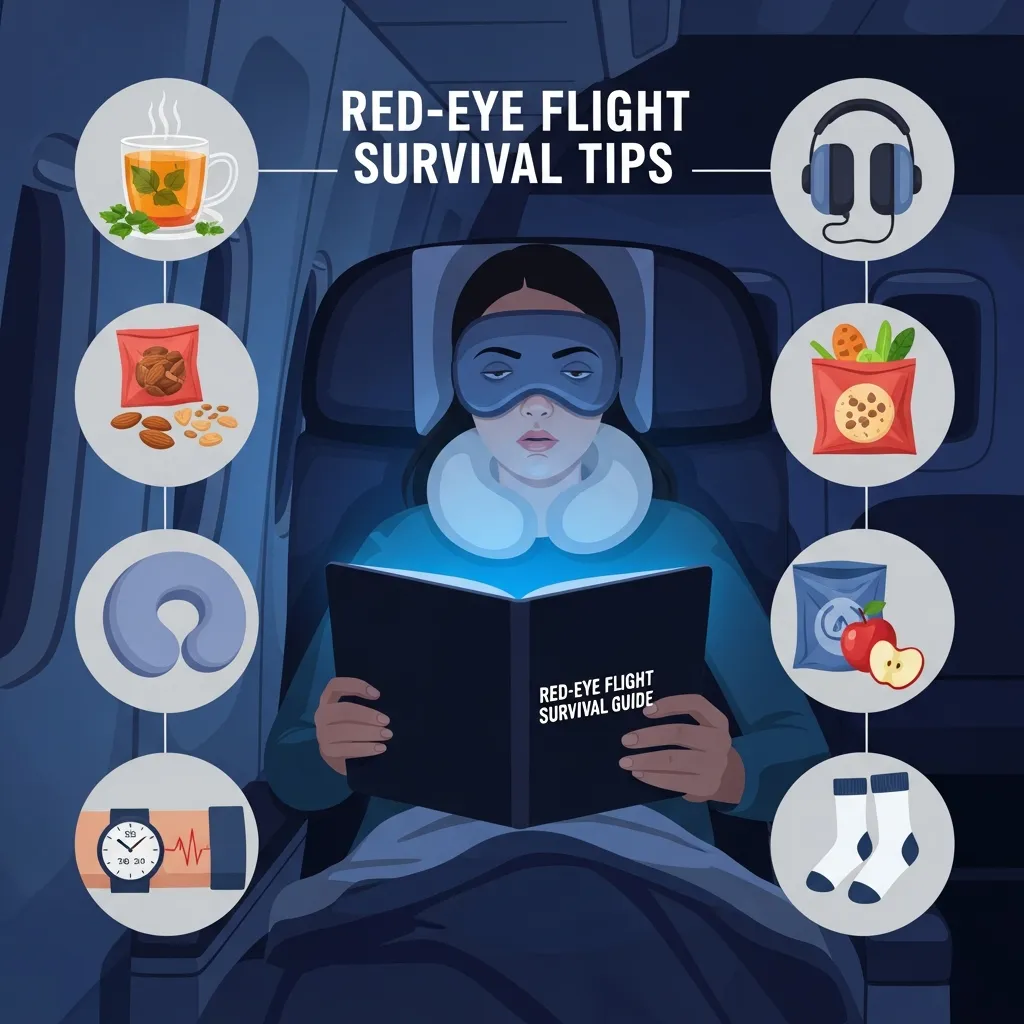
Red eye flight survival tips include adjusting your sleep schedule before departure, packing personal item packing essentials like neck pillows and eye masks, choosing travel safety accessories such as compression socks, and managing hydration throughout your flight. Strategic seat selection, natural sleep aids, and a solid post-flight recovery plan will significantly improve your overnight travel experience.
Red eye flights are a paradox. They save you time and money, but they ask something in return—your sleep, your comfort, and sometimes your sanity. Boarding a plane at midnight, wedged between strangers at 35,000 feet, isn’t most people’s idea of restful travel. Yet millions of passengers choose overnight flights every year, and for good reason.
Done right, a red eye can be one of the most efficient ways to travel. You land at your destination with a full day ahead, skip a hotel night, and often pay less for your ticket. The catch? Arriving exhausted and disoriented defeats the whole purpose.
The difference between a miserable overnight flight and a manageable one comes down almost entirely to preparation. Knowing what to pack, how to sleep, how to protect your health, and how to recover afterward transforms the red eye from a dreaded ordeal into a genuinely smart travel strategy.
This guide covers everything—from pre-flight prep and personal item packing to in-flight sleep strategies, travel safety accessories, and post-flight recovery. Whether you’re a frequent flyer or stepping onto a red eye for the first time, these red eye flight survival tips will help you land feeling as human as possible.
What to Do Before Your Red Eye Flight
How should you adjust your sleep schedule before an overnight flight?
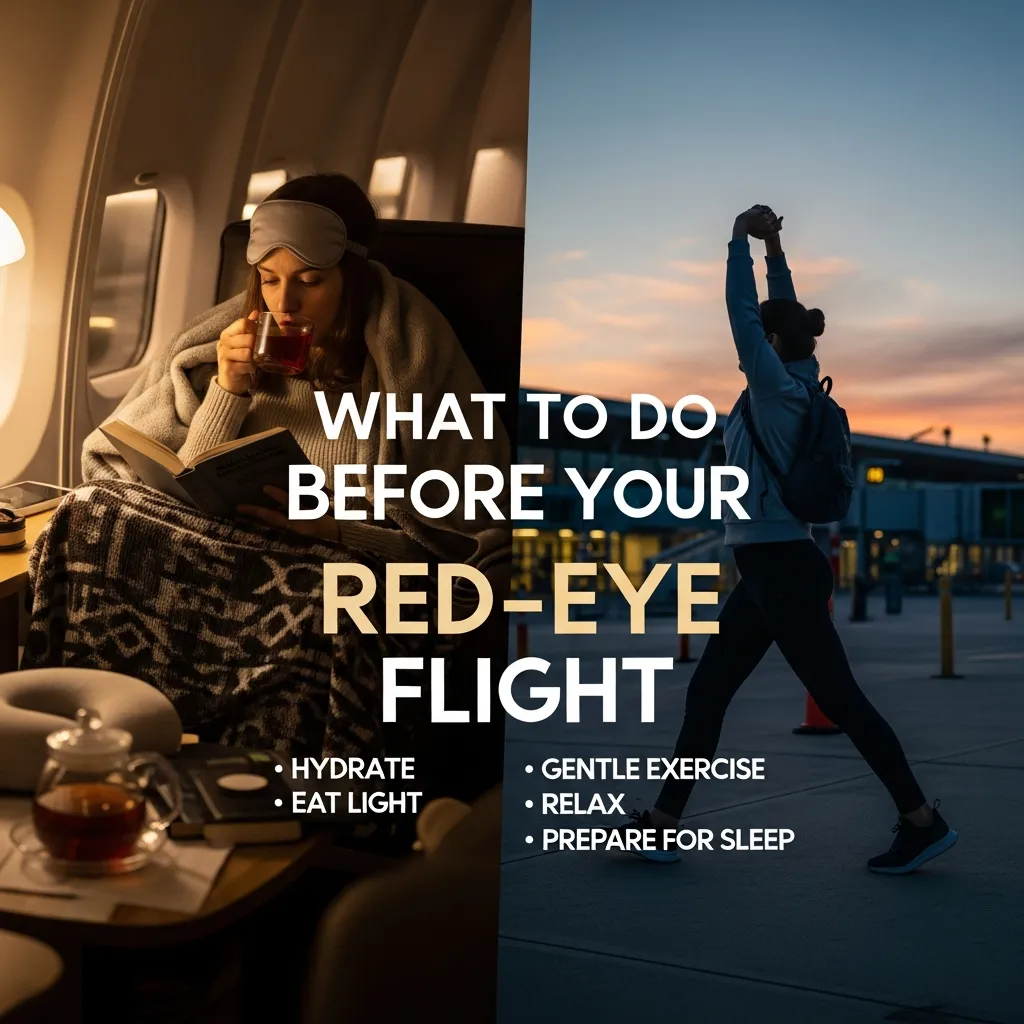
Preparation starts days before you board. Shifting your sleep schedule gradually—going to bed 30 to 60 minutes earlier each night for two to three days before your flight—helps prime your body for sleeping at altitude. This is especially helpful if you’re crossing multiple time zones, as it softens the circadian disruption waiting on the other side.
On the day of your flight, resist the urge to nap excessively. A light nap of 20 minutes in the early afternoon is fine, but sleeping for hours will make it harder to fall asleep on the plane when you actually need to.
What personal item packing essentials should you bring on a red eye?
Personal item packing is where most travelers either win or lose the red eye game. Your personal item should function as a sleep and wellness kit. The essentials include:
- A compact neck pillow (or a travel pillow alternative—more on this below)
- A quality sleep mask to block cabin lighting
- Noise-canceling headphones or foam earplugs
- A reusable water bottle to stay hydrated between service
- A light snack—a small bag of nuts or a protein bar to avoid relying on airline timing
- Hand sanitizer and facial wipes for hygiene during long hauls
- Lip balm and moisturizer, since cabin air is notoriously dehydrating
- A physical or digital book for winding down before sleep
Keep your personal item accessible under the seat in front of you. Stowing everything in the overhead bin means climbing over seatmates at 2 a.m.—a move nobody on that flight will appreciate.
What clothing is best for red eye flight comfort?
What you wear on a red eye matters more than most passengers realize. Compression, layering, and breathability are the three principles to build around.
Opt for loose, stretchy clothing in natural fabrics like cotton or bamboo. Joggers, leggings, and a soft long-sleeve top work well. A lightweight zip-up hoodie or a travel wrap doubles as both warmth and a makeshift blanket. Avoid jeans, belts, and restrictive waistbands—these become genuinely uncomfortable after a few hours in a reclined seat.
Wear slip-on shoes for easy removal during the flight, and pack compression socks in your personal item to put on after boarding.
Sleep and Rest Strategies on Overnight Flights
What are the best travel pillow alternatives for neck support?
Traditional U-shaped neck pillows are a staple, but they’re not everyone’s preference—and they take up significant bag space. Effective travel pillow alternatives include:
- Inflatable travel pillows, which pack flat and inflate on demand
- Wrap-style pillows that secure around the neck with a clasp, preventing head-drooping
- A rolled-up hoodie or scarf tucked against the window or seat gap
- Lumbar pillows, which some travelers prefer behind the lower back for spinal support
The wrap-style pillow tends to outperform the classic U-shape for passengers who sleep sitting upright, since it prevents the head from falling forward.
How can you create an optimal sleep environment in your airplane seat?
The airplane cabin is a hostile sleep environment—bright, noisy, dry, and full of strangers. You can’t change the environment, but you can insulate yourself from it.
Start by dimming your screen well before your target sleep time. Bright screens suppress melatonin production, making it harder to fall asleep naturally. Put on a sleep mask and noise-canceling headphones or earplugs, even if you’re not using them for audio—the physical sensation of blocking out stimuli signals to your brain that it’s time to wind down.
Recline your seat as soon as it’s acceptable to do so, and request a blanket from the flight crew before settling in. Cabin temperatures tend to drop significantly during overnight flights.
What sleep aids are safe for air travel?
For passengers who struggle to sleep in transit, natural sleep aids offer a gentler approach than prescription options. Melatonin is the most widely used—a low dose of 0.5 to 3mg taken 30 minutes before your intended sleep time can help shift your body clock without leaving you groggy on arrival. Magnesium glycinate is another option, supporting muscle relaxation and calm without sedation.
If you’re considering an over-the-counter antihistamine like diphenhydramine, be aware that these can cause grogginess that extends well beyond the flight. For most travelers, melatonin and good sleep hygiene habits are sufficient. Always consult a healthcare provider before taking any sleep aid on a flight, particularly on long-haul routes.
Health and Wellness During Overnight Flights
What does a health safety guide for long overnight flights look like?
Overnight air travel places genuine physiological demands on the body. Low cabin humidity (typically around 10–20%), reduced oxygen levels, prolonged sitting, and circadian disruption all contribute to how you feel post-flight. A practical health safety guide for red eye passengers focuses on four pillars: hydration, nutrition, circulation, and rest.
How much water should you drink during a red eye flight?
The general recommendation is to drink approximately 250ml (8oz) of water for every hour of flight time. Avoid alcohol and limit caffeine intake—both accelerate dehydration and interfere with sleep quality. If the flight attendant offers water during the service, always accept. Bring a refillable bottle in your personal item packing and ask crew members to fill it during the flight.
Moisturizing your skin, using saline nasal spray, and applying lip balm also help combat the drying effects of recirculated cabin air.
How can you prevent blood clots and DVT on long overnight flights?
Deep vein thrombosis (DVT) is a genuine concern on flights exceeding four hours, particularly for travelers who remain seated for extended periods. Compression socks are the single most effective travel safety accessory for reducing this risk—they improve venous blood flow in the legs and reduce swelling.
Beyond compression socks, movement is essential. Stand and walk the aisle every 60 to 90 minutes when safe to do so. Calf raises, ankle circles, and knee lifts can all be performed in your seat without disturbing fellow passengers.
How do you manage jet lag symptoms from a red eye flight?
Jet lag results from the mismatch between your internal clock and the local time at your destination. To minimize its impact, set your watch to destination time as soon as you board. Eat according to your destination’s meal schedule rather than the airline’s service times where possible, and seek natural light upon arrival—it’s one of the most powerful cues for resetting the circadian rhythm.
Travel Safety Accessories Worth Packing
The right travel safety accessories won’t transform a cramped middle seat into a luxury suite, but they will make a measurable difference to your comfort and health.
Compression socks: Essential for flights over four hours. Medical-grade compression socks (15–20 mmHg) are widely available and easy to pack. Put them on after boarding for maximum benefit.
Sleep mask: A contoured eye mask blocks out cabin lighting without pressing against your eyelids. Look for masks with memory foam padding for added comfort.
Noise-canceling headphones: Active noise-canceling headphones dramatically reduce engine noise and ambient cabin sound, making it significantly easier to fall asleep. Wireless models from Sony and Bose are frequently cited by frequent travelers.
Hand sanitizer and hygiene wipes: Airplane tray tables are among the highest-contact surfaces in public transit. Wipe down your armrests, tray table, and seat buckle upon boarding.
Portable charger: A compact power bank ensures your devices stay charged throughout the flight, particularly important on routes without in-seat power outlets.
In-Flight Comfort Tips That Actually Work
What seat selection strategies lead to better rest on red eye flights?
Seat selection is one of the most impactful pre-flight decisions you can make. Window seats offer a wall to lean against and eliminate the need to stand for aisle access—a significant advantage on overnight flights. Exit row and bulkhead seats provide extra legroom but sometimes lack under-seat storage, which limits your personal item packing accessibility.
Avoid seats near the galley or lavatories. These areas experience the highest foot traffic and noise levels throughout the night.
What exercises can you do in an airplane seat to stay comfortable?
A series of simple movements can prevent stiffness and improve circulation during long hauls:
- Ankle rolls: Rotate each ankle clockwise and counterclockwise for 10 repetitions
- Calf raises: Lift both heels while seated, hold for two seconds, and lower
- Seated spinal twist: Gently rotate your torso to each side, holding for 15 seconds
- Neck rolls: Slowly drop your ear to your shoulder on each side, then look left and right
- Knee lifts: Alternate raising each knee toward your chest for 10 repetitions
Performing this circuit every 60 to 90 minutes keeps blood moving and prevents the deep ache that comes from hours of immobility.
How should you regulate temperature during an overnight flight?
Cabin temperature is notoriously inconsistent and often drops significantly during overnight hours. Layering is the most practical solution. A lightweight down jacket or packable vest can be compressed into your personal item and pulled out when the temperature dips. If the airline provides blankets, use them—but supplement with your own layers if you run cold.
Post-Flight Recovery After a Red Eye
What are the best strategies for post-flight recovery?
Landing after a red eye is not the finish line—it’s a transition point. How you handle the first few hours after landing determines how quickly you recover.
Rehydrate immediately: Drink a full glass of water before leaving the airport. Add an electrolyte tablet to your water bottle if you have one—overnight flights deplete sodium and potassium levels.
Eat a balanced meal: After a night of minimal or disrupted eating, your body needs stable blood sugar. Prioritize whole foods—eggs, whole grains, fruit—over airport pastries and sugary coffee drinks.
Seek natural light: Sunlight is the most powerful signal for resetting your circadian rhythm. Step outside as soon as possible after landing, even briefly.
Limit napping: If you must nap, keep it under 30 minutes. Sleeping for hours after a red eye typically makes jet lag worse by further confusing your body clock.
Exercise lightly: A 15-minute walk or gentle stretch session gets blood flowing, clears grogginess, and helps your body orient to local time.
Final Thoughts: Make Your Red Eye Work for You
Red eye flight survival tips aren’t about eliminating discomfort—they’re about reducing it enough that overnight travel becomes a strategic advantage rather than a physical toll. With thoughtful personal item packing, the right travel safety accessories, and a clear plan for sleep and recovery, a red eye can be a genuinely efficient way to travel.
The passengers who thrive on overnight flights aren’t necessarily the ones with lie-flat business class seats. They’re the ones who prepared—who packed a good travel pillow alternative, wore their compression socks, drank water instead of wine, and walked the aisle before settling in for sleep. These habits are available to every traveler, regardless of budget or class.
Apply even half of the strategies in this health safety guide, and you’ll notice the difference on your next overnight flight.
Frequently Asked Questions About Red Eye Flight Survival Tips
What are the best travel pillow alternatives for Red Eye Flight Survival Tips?
One of the most effective Red Eye Flight Survival Tips is using a wrap-style neck pillow that keeps your head from falling forward. Inflatable pillows, rolled hoodies, and travel scarves are also excellent lightweight alternatives for overnight flight comfort.
How can Red Eye Flight Survival Tips help me stay healthy during overnight flights?
The most important Red Eye Flight Survival Tips for staying healthy are drinking about 250ml of water per hour, wearing compression socks, moving your legs regularly, walking the aisle every 90 minutes, and avoiding alcohol. Sanitizing tray tables and armrests also helps reduce germ exposure.
What should I pack for Red Eye Flight Survival Tips?
Smart packing is a key part of Red Eye Flight Survival Tips. Carry a sleep mask, travel pillow, noise-canceling headphones, reusable water bottle, lip balm, compression socks, snacks, hand sanitizer, and a portable charger in an easy-to-reach under-seat bag.
How do Red Eye Flight Survival Tips help prevent jet lag?
Effective Red Eye Flight Survival Tips include switching your watch to the destination time zone before takeoff, sleeping according to the new schedule, getting sunlight immediately after landing, staying hydrated, and avoiding long daytime naps after arrival.
Are travel safety accessories necessary for Red Eye Flight Survival Tips?
Yes. Travel safety accessories are highly recommended for Red Eye Flight Survival Tips because compression socks support circulation, sleep masks improve rest, noise-canceling headphones reduce cabin noise, and hand sanitizer lowers the risk of picking up germs during the flight.
What sleep aids work best with Red Eye Flight Survival Tips?
For Red Eye Flight Survival Tips, low-dose melatonin (0.5–3mg) is generally considered the safest and most useful option. Magnesium glycinate may also promote relaxation, while stronger antihistamines often cause lingering grogginess after landing.
How can Red Eye Flight Survival Tips improve circulation?
A simple but powerful Red Eye Flight Survival Tips strategy is wearing compression socks and doing ankle rolls, calf raises, knee lifts, and short aisle walks every 60–90 minutes to reduce stiffness and support healthy blood flow.
What clothing works best for Red Eye Flight Survival Tips?
Comfort-focused Red Eye Flight Survival Tips recommend loose, breathable clothing such as joggers, leggings, soft long-sleeve tops, hoodies, and slip-on shoes that make it easier to rest and adjust to changing cabin temperatures.
How much water should I drink using Red Eye Flight Survival Tips?
Hydration is one of the most important Red Eye Flight Survival Tips. Aim for roughly 250ml (8oz) of water per hour of flight time, while limiting caffeine and avoiding alcohol to prevent dehydration and improve sleep quality.
What exercises are included in Red Eye Flight Survival Tips?
Useful Red Eye Flight Survival Tips exercises include ankle circles, seated calf raises, knee lifts, spinal twists, shoulder rolls, and gentle neck stretches performed every hour to keep your body comfortable during long overnight flights.
How should I adjust my sleep schedule with Red Eye Flight Survival Tips?
A practical Red Eye Flight Survival Tips approach is to shift your bedtime 30–60 minutes earlier for several nights before departure, avoid caffeine after midday, and keep pre-flight naps short so your body is ready to sleep on the plane.
What are the best post-flight recovery Red Eye Flight Survival Tips?
The best post-flight Red Eye Flight Survival Tips are to rehydrate immediately, eat a balanced meal, spend time in natural sunlight, do some light walking or stretching, avoid long naps, and go to bed according to the local time at your destination.



Leave a Reply