


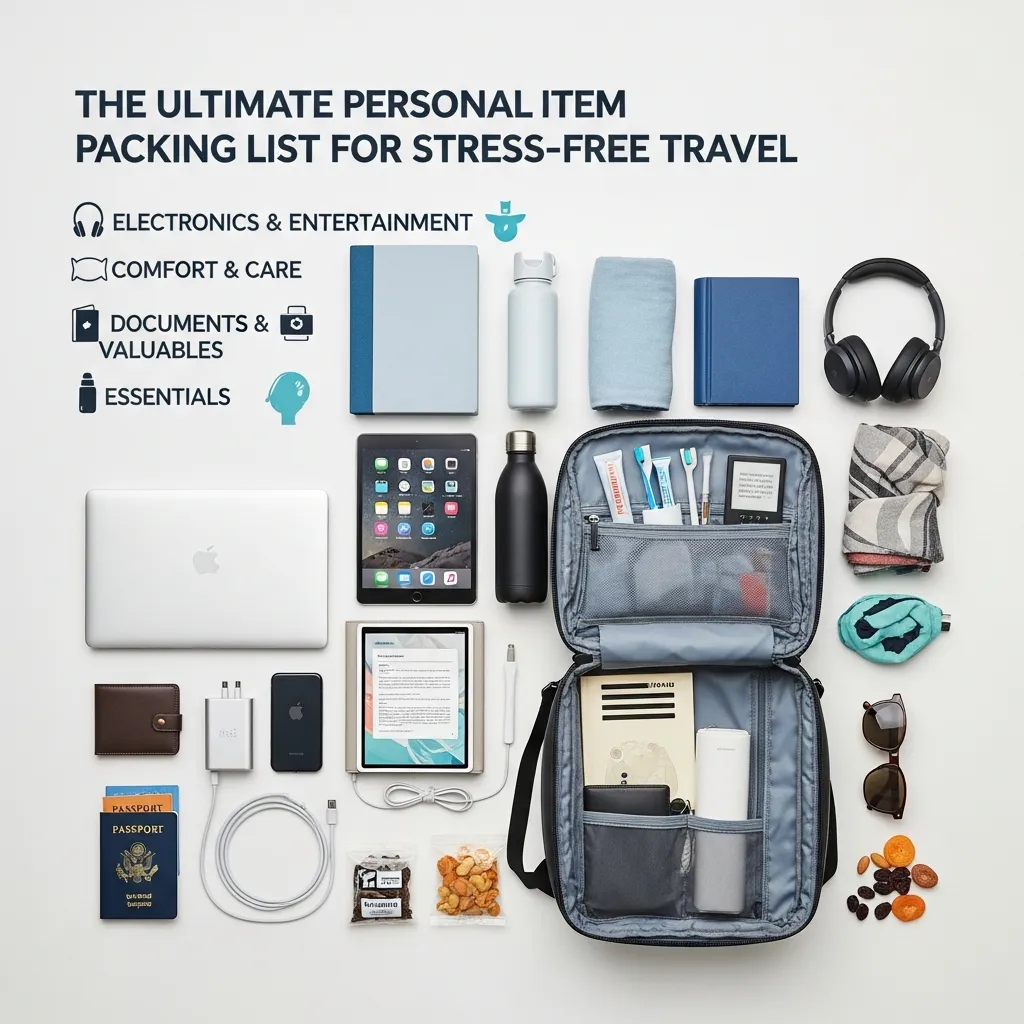
A well-curated personal item packing list ensures you have everything you need within arm’s reach during your journey. From travel documents to comfort essentials, the right personal item setup reduces stress, saves money on checked bag fees, and keeps you prepared for any situation.
Your personal item is the unsung hero of every successful trip. Not your checked bag. Not even your carry-on. The small bag tucked under the seat in front of you holds your passport, your medications, your entertainment, and your peace of mind—all within arm’s reach from takeoff to touchdown.
Yet most travelers treat their personal item as an afterthought, cramming it with random items at the last minute. The result? A frantic search through a disorganized bag mid-flight, or arriving at your destination to realize your phone charger is buried somewhere in checked luggage on the other side of the carousel.
A thoughtful personal item packing list changes all of that. With the right strategy, your personal item becomes a mobile command center—compact, organized, and perfectly tailored to your journey. This guide walks you through everything you need to know: what qualifies as a personal item, what to pack in it, how to pack it efficiently, and how it works alongside your carry on packing list for a seamless travel experience.
Understanding the Personal Item: What It Is and Why It Matters
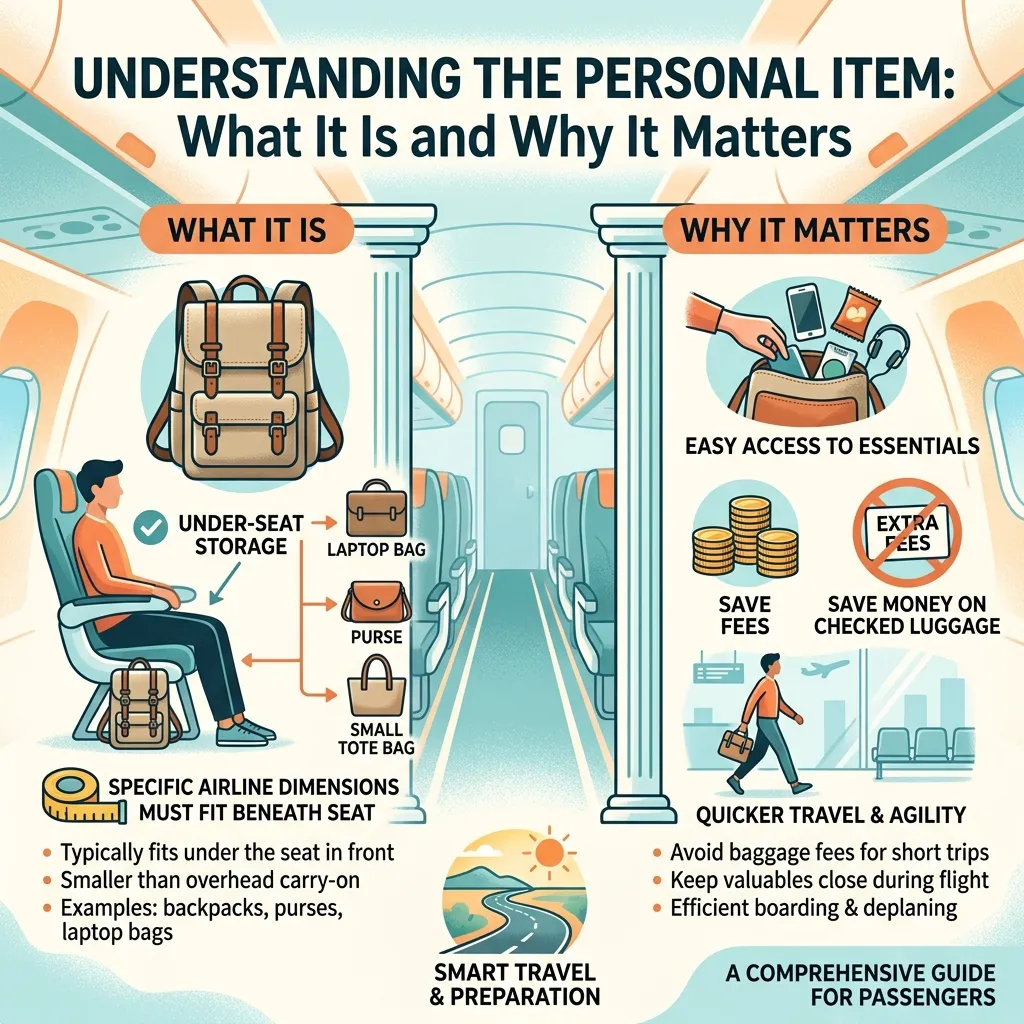
What qualifies as a personal item on a flight?
A personal item is a smaller bag that passengers carry onto the plane in addition to their carry-on. Most airlines allow passengers to bring one carry-on bag and one personal item at no extra charge. Personal items typically include backpacks, tote bags, purses, laptop bags, and small duffel bags.
Size restrictions vary by airline, but most personal items must fit under the seat in front of you. Common maximum dimensions range from 18 x 14 x 8 inches (Spirit Airlines) to 17 x 13 x 8 inches (Delta). Always check your airline’s specific policy before packing.
Crucially, a personal item is not a second full-sized carry-on. Trying to pass off an oversized bag as a personal item can result in gate-check fees—the opposite of the savings you were aiming for.
Why a strong personal item packing list saves you time and money
Airlines like Spirit, Frontier, and Ryanair charge significant fees for checked bags and, increasingly, for carry-ons too. On Spirit Airlines, for example, carry-on fees can exceed $79 each way if purchased at the gate (according to Spirit Airlines’ fee schedule). Your personal item, however, is always free.
Beyond the financial angle, your personal item is the bag you access most during a journey. Everything you need during security, boarding, the flight, and your first hour at the destination should live there. That accessibility alone makes a curated personal item packing list one of the highest-value investments in your travel routine.
The Core Personal Item Packing List: Essentials for Every Traveler
A solid personal item packing list starts with the non-negotiables—items every traveler needs regardless of destination or trip length.
Travel documents and valuables
- Passport or government-issued ID
- Boarding passes (printed or digital)
- Visa documentation (if applicable)
- Travel insurance details
- Wallet with local currency and travel-friendly credit cards
- Hotel confirmation or Airbnb details
- Emergency contact information (printed copy)
Keep these in a dedicated zip pouch near the top of your bag for quick access at security and border control.
Entertainment and connectivity
Long flights pass much faster with the right entertainment setup. Your personal item packing list should include:
- Smartphone (fully charged before departure)
- Tablet or e-reader loaded with books, shows, or podcasts
- Noise-canceling headphones or quality earbuds
- Portable power bank (look for at least 10,000mAh capacity)
- USB charging cables for all devices
- A small multi-port USB charger for layovers
Health and wellness
- Prescription medications (always carry these in your personal item, never in checked luggage)
- Basic pain relievers (ibuprofen or acetaminophen)
- Band-aids and any personal first aid needs
- Hand sanitizer (travel size, within liquid limits)
- Lip balm and travel-size moisturizer
- Tissues or a small pack of wet wipes
Comfort essentials for the flight
Comfort on a flight comes down to a few small items that make a surprisingly large difference:
- Eye mask to block cabin light
- Foam earplugs or noise-reducing earplugs
- A lightweight scarf or pashmina (doubles as a blanket)
- Travel pillow alternatives like an inflatable neck pillow or a compact memory foam pillow
- Compression socks (especially valuable on flights over 4 hours)
- A change of socks for long haul routes
Travel pillow alternatives have come a long way. Inflatable options pack down to almost nothing, while new J-pillow and trtl pillow designs take up minimal space in a personal item while still delivering real neck support.
Tailoring Your Personal Item Packing List to Specific Travel Scenarios
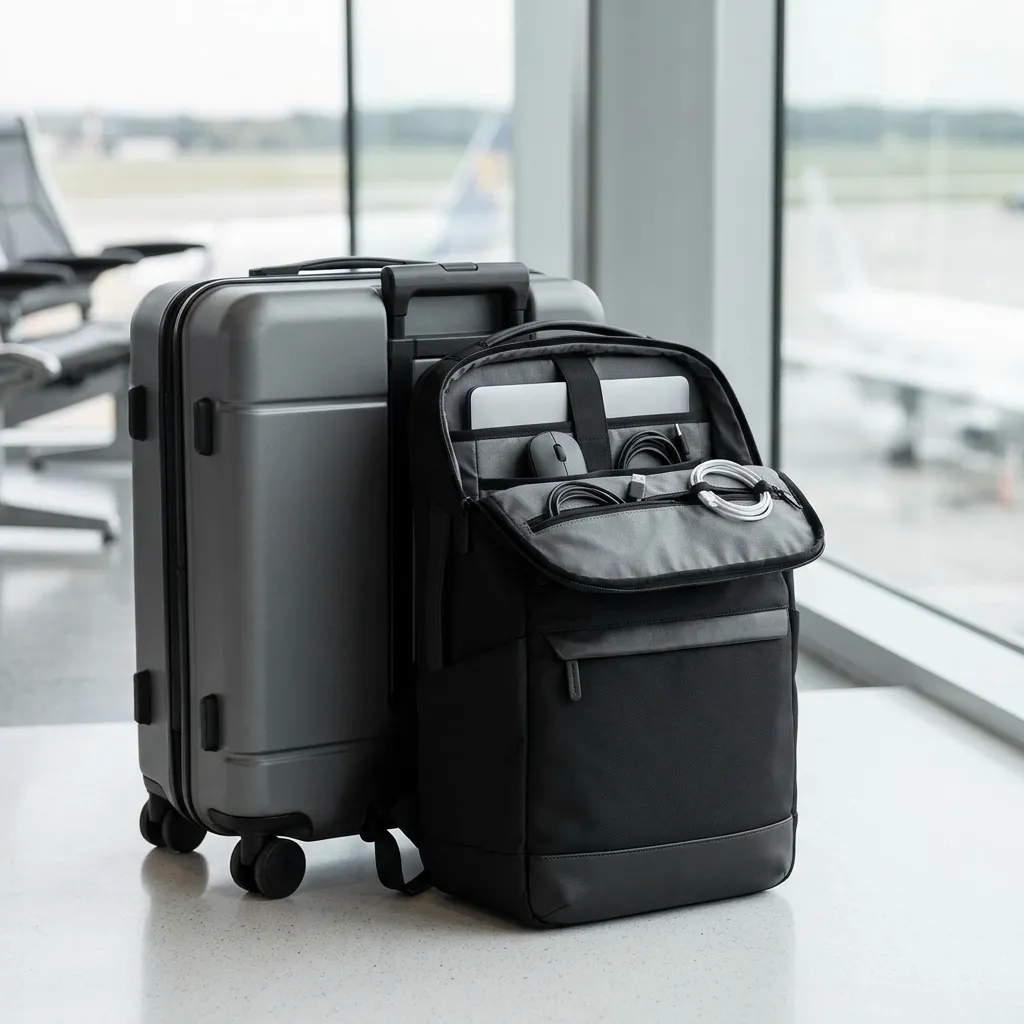
The best personal item packing list is one that matches your specific trip. What works for a weekend city break looks very different from a 14-hour long-haul flight.
Business travel personal item packing list
- Laptop (if it fits; otherwise it may belong in your carry-on)
- Laptop charger and portable mouse
- Business cards
- A small notebook and pen
- Professional documents or presentation materials
- Portable document scanner app preloaded on your phone
For business travelers, the personal item often functions as a mobile office. Prioritize quick access to your laptop and documents over comfort items.
Long-haul flights: what to add to your personal item packing list
Long-haul flights demand extra attention to comfort and hygiene. Add these to your standard personal item packing list:
- Hydrating face mist or sheet mask
- Travel toothbrush and mini toothpaste
- A spare set of socks and underwear
- Compression socks (essential for flights over 6 hours)
- A small journal or crossword book for offline entertainment
- Melatonin or sleep aids (if you use them)
Short trips and weekend getaways
For a 2–3 day trip, your personal item can sometimes function as your only bag. Use a minimalist approach:
- One or two versatile outfits rolled tightly
- Toiletries in a clear quart-sized bag
- Just enough entertainment and tech to stay productive or entertained
- Your complete travel documents and wallet setup
This approach entirely eliminates checked bag fees and reduces airport time dramatically. Learn more Travel Guide for Easy & Safe Trips
Traveling with kids: adjustments to your personal item packing list
Parents know that a child’s needs change in an instant. A family-focused personal item packing list should include:
- Small toys or activity books
- Healthy snacks (crackers, raisins, pouches)
- Baby wipes or travel packs of wet wipes
- A change of clothes for each child (and one for you)
- Headphones sized for kids
- A favorite small comfort item (stuffed animal, blanket)
Strategic Packing Techniques for Your Personal Item
Knowing what to pack is only half the equation. How you pack your personal item packing list determines how accessible and organized everything stays throughout your journey.
Maximizing space in a personal item
- Use small packing cubes to compress clothing and keep categories separated
- Roll soft items rather than folding them to save space and reduce wrinkles
- Utilize exterior pockets for quick-access items: boarding pass, lip balm, earbuds
- Wear your bulkiest items on the plane—heavy shoes, a jacket, or a thick sweater
Organization hacks that actually work
- Use a clear zip pouch for documents and valuables
- Assign a specific pocket to each category (tech, health, comfort) and stick to it
- Place items you’ll need at security (passport, laptop, quart bag of liquids) at the very top of your bag
- Use a small carabiner clip to attach keys or a luggage tag to the interior
Security considerations for your personal item
Your personal item travels with you at all times—this makes it the safest place for valuables. To add an extra layer of protection:
- Use a bag with a hidden inner pocket for your passport and cash
- Consider a TSA-approved lock for the main zipper
- Never leave your personal item unattended in airports or on planes
- Pre-arrange your bag before security so electronics and liquids are on top for quick removal
Airport Travel Essentials: Navigating Your Journey from Check-In to Landing
How to organize your personal item packing list for airport security
Airport security moves faster when your personal item packing list accounts for the process itself. The TSA’s 3-1-1 liquids rule requires all liquids, gels, and aerosols to be in containers of 3.4 ounces or less, placed in a single quart-sized clear bag. Keep that bag at the very top of your personal item.
Electronics larger than a smartphone—laptops, tablets, e-readers—typically need to be removed and placed in a separate bin. Organize your personal item so these items are easy to pull out and put back quickly.
Airport travel essentials to keep in an accessible outer pocket during transit:
- Boarding pass
- ID or passport
- Phone (for digital passes)
- Earplugs or earbuds for immediate use after boarding
What to keep within reach during the flight
Once you’re settled, keep these airport travel essentials in your seat pocket or on your tray table rather than shoving your bag overhead:
- Headphones
- Eye mask and earplugs
- Your phone or entertainment device
- Lip balm and hand sanitizer
- Any medications you may need mid-flight
- Snacks
The Synergy Between Your Personal Item Packing List and Your Carry On Packing List
A personal item packing list and a carry on packing list are most effective when they’re designed together, not separately. The goal is zero duplication and maximum coverage.
How your personal item packing list complements your carry on packing list
Think of your carry on packing list as storage for the journey, and your personal item as your active toolkit. Your carry-on holds clothes, shoes, and items you won’t need until you arrive. Your personal item holds everything you’ll touch between now and landing.
Avoid packing the same items in both bags. If your charger is in your personal item, it doesn’t need to be in your carry-on too. Map out your carry on packing list first, then fill your personal item with the items that need to remain accessible.
Seamless transitions from airport to destination
Travelers who’ve mastered their carry on packing list alongside their personal item packing list move through airports with ease. No hunting through overhead bins for a phone charger. No waiting at baggage claim for essentials. You land, grab your bags, and you’re ready.
Beyond the Basics: Advanced Personal Item Packing List Tips
The “just-in-case” additions worth the space
A few small items occupy almost no space but rescue a trip when things go sideways:
- A compact travel umbrella
- A reusable tote bag (folds to the size of a wallet)
- A universal travel adapter
- A small roll of duct tape or safety pins
- A spare pen (always useful on international arrival forms)
Building a personalized personal item packing list
The best personal item packing list is ultimately a personal one. A traveler with anxiety may prioritize a journal and noise-canceling headphones. A photographer might need extra memory cards and a lens cloth. A frequent flyer may swap the travel pillow for a premium ergonomic neck support.
Start with the universal essentials above, then layer in items that genuinely improve your specific travel experience. After a few trips, your list will evolve into something that feels entirely custom-built—because it is.
A Brief Travel Guide for Easy and Safe Trips
No personal item packing list operates in a vacuum. A safe, smooth trip starts with preparation that extends beyond what’s in your bag.
- Research your destination before you leave: entry requirements, local customs, health advisories, and transportation options
- Purchase travel insurance that covers medical emergencies, cancellations, and lost luggage
- Share your itinerary with someone at home, including hotel names, flight numbers, and emergency contact details
- Enable location sharing on your phone with a trusted contact for the duration of your trip
- Store digital copies of your passport, travel insurance, and key documents in a secure cloud folder
This travel guide approach to pre-trip planning ensures that if something goes wrong, you have the infrastructure to handle it—without scrambling.
Pack Smarter, Travel Better
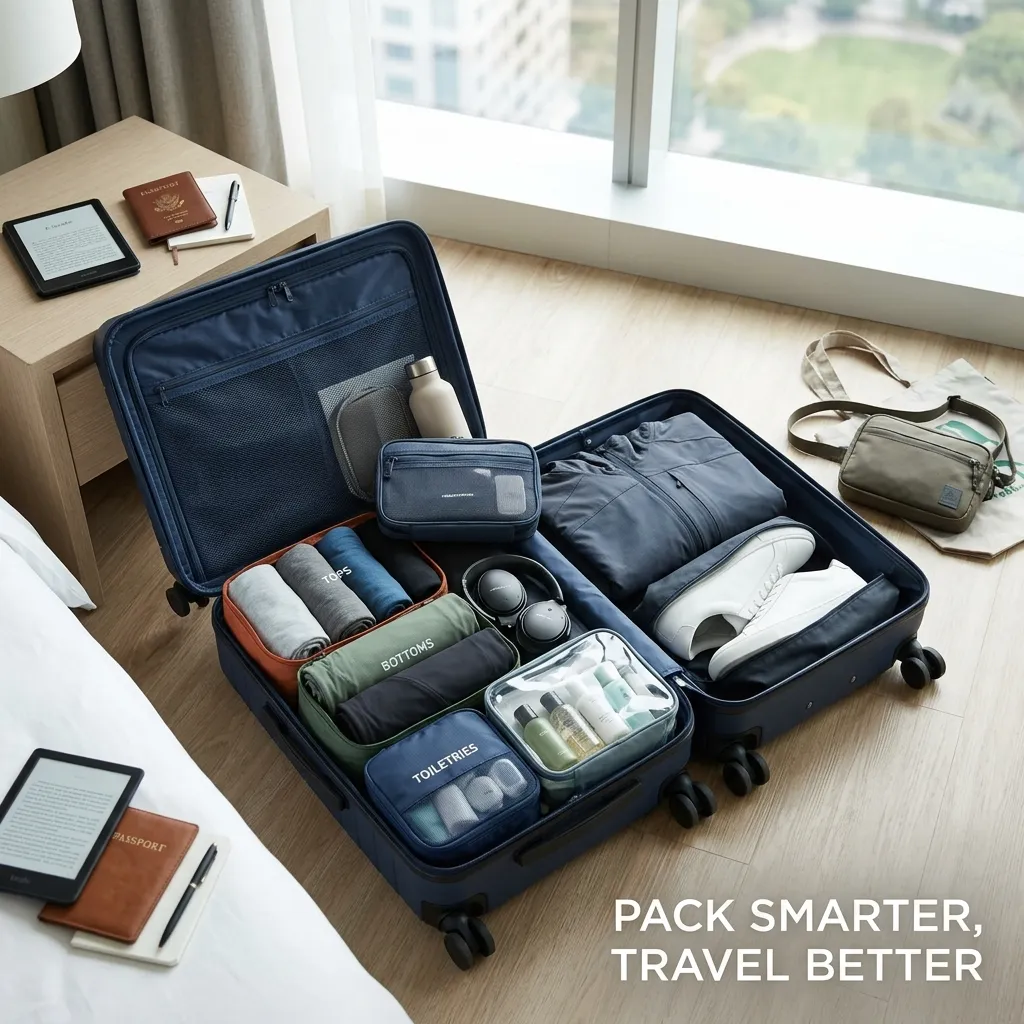
A thoughtful personal item packing list is one of the simplest ways to improve the quality of every trip you take. It reduces stress at the airport, saves money on bag fees, keeps your essentials accessible at all times, and ensures you’re prepared for the unexpected.
Start with the core essentials—documents, tech, health, and comfort. Adapt your list based on the trip type, whether you’re managing a long-haul flight, a business conference, or a family vacation. Pair your personal item packing list with a complementary carry on packing list to eliminate duplication and create a seamless packing system.
The goal isn’t to pack everything. The goal is to pack the right things—and to know exactly where they are when you need them. With the right personal item packing list, every journey becomes a little more comfortable, a little more efficient, and a lot more enjoyable.
Frequently Asked Questions
How is a personal item different from a carry-on?
A personal item is a smaller bag—such as a backpack, tote, or purse—that fits under the seat in front of you. A carry-on is a larger bag stored in the overhead bin. Most airlines allow one of each per passenger at no extra charge. Your personal item packing list should focus on items you need during the flight, while your carry on packing list holds everything else.
What are the typical size restrictions for a personal item?
Size restrictions vary by airline. Common dimensions range from 17 x 13 x 8 inches (Delta) to 18 x 14 x 8 inches (Spirit). Always check your specific airline’s website before packing, as exceeding these limits may result in gate fees.
Can I bring food in my personal item?
Yes. Most solid foods are permitted in your personal item through airport security in both the US and internationally. Liquids and gels—including soups, yogurt, and spreads—must comply with the TSA’s 3-1-1 rule when passing through US security checkpoints.
Are there any restrictions on liquids in a personal item?
Yes. Under TSA rules, all liquids, gels, and aerosols must be in containers of 3.4 ounces (100ml) or less, all placed in a single, quart-sized, clear plastic zip-top bag. This bag should be placed at the top of your personal item for easy removal at security. International airports follow similar regulations.
What are good travel pillow alternatives for my personal item?
Popular travel pillow alternatives that pack compactly include the Trtl pillow (folds flat), the Bcozzy chin-supporting pillow, inflatable neck pillows, and lightweight memory foam roll pillows. These travel pillow alternatives take up far less space than traditional U-shaped pillows while still providing meaningful neck support.
How can I keep my personal item organized during travel?
Use small pouches or packing cubes to group items by category (documents, tech, health, comfort). Assign a fixed pocket to each category and stick to it throughout the trip. Placing frequently accessed items in exterior pockets—boarding pass, earbuds, lip balm—further reduces in-bag searching.
Is a backpack a good personal item for flights?
Yes, a compact backpack is one of the most versatile personal item options. Look for backpacks with multiple compartments, a hidden pocket for valuables, and dimensions within your airline’s personal item size limits. Brands like Osprey, Patagonia, and Peak Design make excellent travel backpacks that double as personal items.
What electronics should always be in my personal item packing list?
At minimum, include your phone, a portable power bank, and charging cables in your personal item packing list. If you use noise-canceling headphones, earbuds, or a tablet for in-flight entertainment, those belong there too. Laptop placement depends on your bag size—if it fits your personal item, keep it there for quick security access.
How can I ensure the security of my personal item while traveling?
Choose a bag with a hidden interior pocket for your passport and cash. Use a TSA-approved lock on the main zipper. Never leave your personal item unattended in airports, cafes, or on public transport. In crowded areas, wear your backpack on your front to prevent pickpocketing.
What if my personal item is too heavy to carry comfortably?
If your personal item feels too heavy, reassess what’s inside. Remove any items that can realistically be stored in your carry-on or checked bag without sacrificing accessibility. Aim for a personal item weight of under 15 lbs. Distribute heavier items (like a power bank or laptop) closer to your back if using a backpack.
What are the essential airport travel essentials to keep accessible during transit?
Your passport or ID, boarding pass, phone, and wallet should be in an exterior pocket or quickly reachable at all times. Lip balm, earbuds, and hand sanitizer are also airport travel essentials worth keeping in a dedicated outer pocket for the duration of your transit.
How do I align my personal item packing list with my carry on packing list?
Map out your carry on packing list first—clothing, shoes, and items for your destination. Then build your personal item packing list around everything you’ll need between leaving home and arriving at your accommodation. Avoid duplicating items across both bags, and ensure your personal item holds all valuables and time-sensitive essentials.



Leave a Reply