


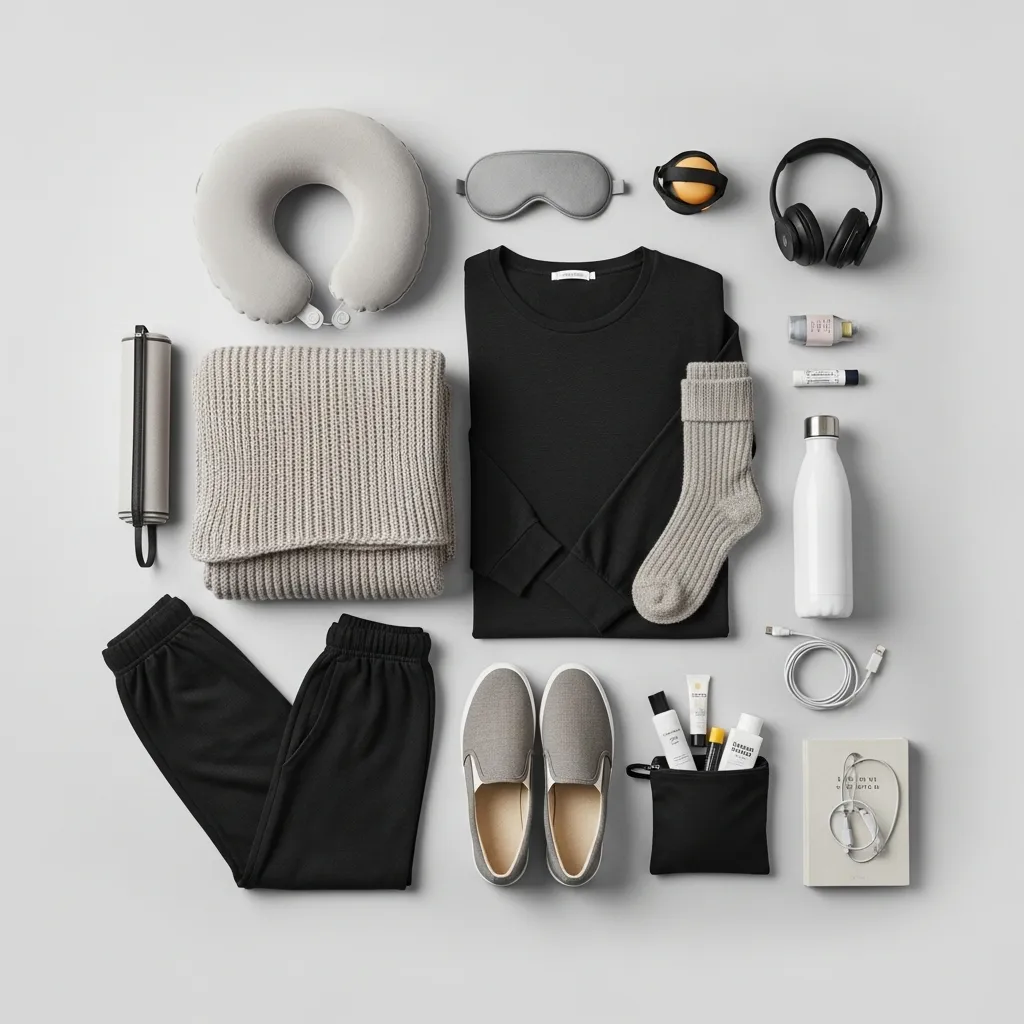
What to wear on a long flight comes down to breathable, moisture-wicking layers you can add or remove easily, comfortable bottoms with flexible waistbands, and slip-on shoes. Pair these with airplane travel essentials like compression socks, a neck pillow, and a lightweight scarf for a noticeably more comfortable journey.
Getting dressed for a long flight might seem trivial—until you’re 10 hours into a 14-hour journey, your jeans feel like a vice, and the cabin has cycled through four different temperatures. What you wear on a long flight directly affects your circulation, sleep quality, and how you feel when you land.
The right outfit isn’t just about looking put-together at the airport. Clothing choices on long-haul flights impact blood flow, body temperature regulation, and even your ability to move comfortably through the cabin. Tight waistbands can restrict digestion. Non-breathable fabrics trap heat and moisture. Shoes that are difficult to remove slow down security and make those mid-flight walks to the bathroom more awkward than they need to be.
This guide breaks down exactly what to wear on a long flight, from base layers to footwear, and covers everything else you need in your personal item packing list—from smart travel accessories to travel toiletries packing tips—so you arrive feeling as good as possible.
Understanding the Physical Challenges of Long-Haul Air Travel
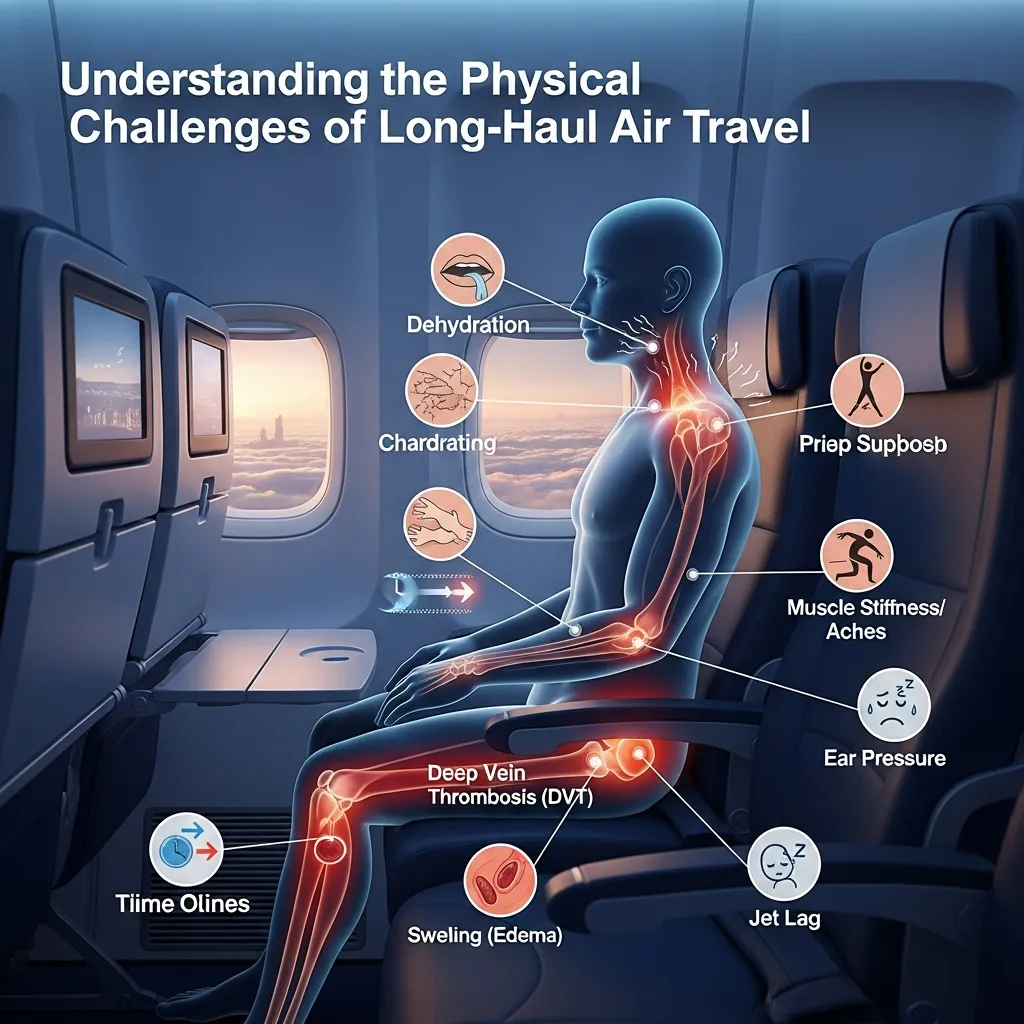
A long-haul flight is generally considered any flight lasting more than six hours. At that duration, the physical effects of sitting in a pressurized, low-humidity cabin start to compound. Cabin altitude is typically pressurized to the equivalent of 6,000–8,000 feet above sea level, which reduces oxygen availability slightly and contributes to dehydration and fatigue.
Temperature is one of the most unpredictable variables. Airplane cabins can swing between stuffy warmth during boarding and a cold chill at cruising altitude. On top of that, individual preferences vary—what feels freezing to one passenger feels fine to another.
Prolonged sitting also reduces circulation, particularly in the legs and feet. This is why deep vein thrombosis (DVT) is a documented risk on long flights, especially for passengers with existing health conditions. The clothes you choose can either support or hinder your circulation throughout the journey.
Mobility matters too. You’ll be reclining, reaching for overhead bins, twisting to grab items from your bag, and walking the aisle. Restrictive clothing makes all of this harder.
How to Layer Clothing for a Long Flight
A layering strategy is the most practical approach to dressing for a long flight. Rather than trying to predict the cabin temperature, you build flexibility into your outfit.
What should you wear as a base layer on a long flight?
Start with a moisture-wicking base layer. Fabrics like merino wool or bamboo are excellent choices because they regulate temperature naturally, breathe well, and don’t hold odor as readily as synthetic blends. A fitted but not tight merino t-shirt or thermal top keeps you comfortable whether the cabin runs hot or cold.
Avoid cotton as a base layer. Cotton holds moisture, which means if you sweat during boarding, you’ll stay damp—and damp clothing in a cool cabin gets uncomfortable quickly.
Which mid-layers work best for temperature regulation on planes?
A lightweight fleece, a zip-up hoodie, or a soft cardigan makes an ideal mid-layer. The key feature is easy on-and-off functionality. Zip-up styles give you more control than pullovers, letting you adjust your temperature without completely removing the layer.
Cashmere and merino wool cardigans are particularly good choices for those who want something that works in-flight and looks polished when they land.
What outer layers are easiest to manage on a plane?
A lightweight packable jacket or a long wrap-style cardigan serves as both an outer layer and an in-seat blanket. Look for something that compresses easily into your personal item packing list without taking up too much space. Down puffer vests, for instance, are warm, packable, and don’t restrict arm movement.
What to Wear on a Long Flight: Top Clothing Recommendations
Best tops for long-haul comfort
Choose tops with some stretch and room through the shoulders. Fitted but flexible works better than baggy, which can bunch awkwardly in a reclined seat. Avoid tops with large buttons, thick seams at the back, or anything you wouldn’t want to sleep in. Soft jersey fabrics, modal blends, and bamboo knits consistently perform well at altitude.
Best bottoms for long flights—and what to avoid
This is where most travelers go wrong. Denim, structured trousers, and anything with a stiff waistband are poor choices for long flights. Tight waistbands compress the abdomen during prolonged sitting, which can cause discomfort and interfere with digestion.
The best options include:
- Joggers or travel pants with an elastic or drawstring waist
- Loose-fit trousers made from stretch woven or ponte fabric
- Leggings, especially high-waist styles that feel supportive without squeezing
- Wide-leg pants in breathable linen or bamboo blends
Can you wear a dress or skirt on a long flight? Absolutely. A midi-length wrap dress or a loose linen skirt with a slip underneath can be one of the most comfortable options, particularly in warm climates. They allow airflow, eliminate waistband pressure, and are easy to move in.
Best shoes for long flights
Footwear is an underrated element of what to wear on a long flight. Feet tend to swell during extended air travel due to reduced circulation and cabin pressure, so shoes that fit snugly at departure may feel tight mid-flight.
The best shoes for long flights are:
- Slip-on sneakers like low-profile canvas or knit styles
- Loafers with cushioned insoles
- Lightweight moccasins or travel flats
Avoid heels, lace-up boots, or anything you’d struggle to remove quickly at security or during the flight. If you plan to walk the aisle in socks, make sure those socks are thick enough to feel comfortable on the cabin floor.
Accessories that add genuine comfort on a long flight
A lightweight scarf doubles as a blanket, a neck wrap, and a layer when draped over the shoulders. It takes up almost no space and solves several temperature-related problems in one item.
A sleep mask, a quality pair of noise-canceling headphones, and a neck pillow round out the core comfort accessories. For travel pillow alternatives, look into the Trtl Pillow, which uses a neck support brace design instead of the traditional U-shape, or an inflatable lumbar pillow that doubles as back support.
Airplane Travel Essentials Beyond Clothing
Clothing sets the foundation, but airplane travel essentials—the items you carry—make the real difference on ultra-long flights.
Compression socks are non-negotiable for flights over six hours. Compression socks for long flights work by applying graduated pressure to the lower legs, encouraging blood to move upward rather than pooling in the feet and ankles. This reduces swelling and lowers DVT risk. Look for socks in the 15–20 mmHg range for general travel comfort.
A lightweight travel blanket or large pashmina supplements whatever the airline provides—or replaces it entirely on airlines that don’t.
An eye mask blocks cabin light during sleep windows, and a pair of foam or silicone earplugs offers a low-tech backup to noise-canceling headphones for lighter sleepers.
For neck support, ergonomic neck pillows filled with memory foam tend to outperform inflatable versions for comfort, though they take more space. As a travel pillow alternative, a rolled merino wool scarf tucked under the chin provides surprisingly effective support.
Travel Toiletries Packing for In-Flight Freshness
Dry cabin air—typically maintained at less than 20% relative humidity—dehydrates skin, eyes, and nasal passages faster than most passengers expect. A focused travel toiletries packing approach keeps you feeling fresh for the duration.
TSA allows liquids in containers of 3.4 ounces (100ml) or less, all fitting in a single quart-sized clear bag. Prioritize:
- Facial mist or hydrating toner for mid-flight refreshing
- Rich facial moisturizer applied after takeoff and before landing
- Lip balm to combat dry, cracked lips
- Eye drops for contact lens wearers or anyone prone to dry eyes
- Travel-size hand cream for repeated use
- Gentle face wipes or micellar water wipes for cleansing without water
For longer flights crossing multiple time zones, a small pouch with a travel-size toothbrush, toothpaste, and a few breath mints makes a real difference to how you feel on the back half of the flight.
Keep travel toiletries packing items in an easy-access outer pocket of your carry-on or personal item—not buried at the bottom.
Personal Item Packing List for a Long Flight
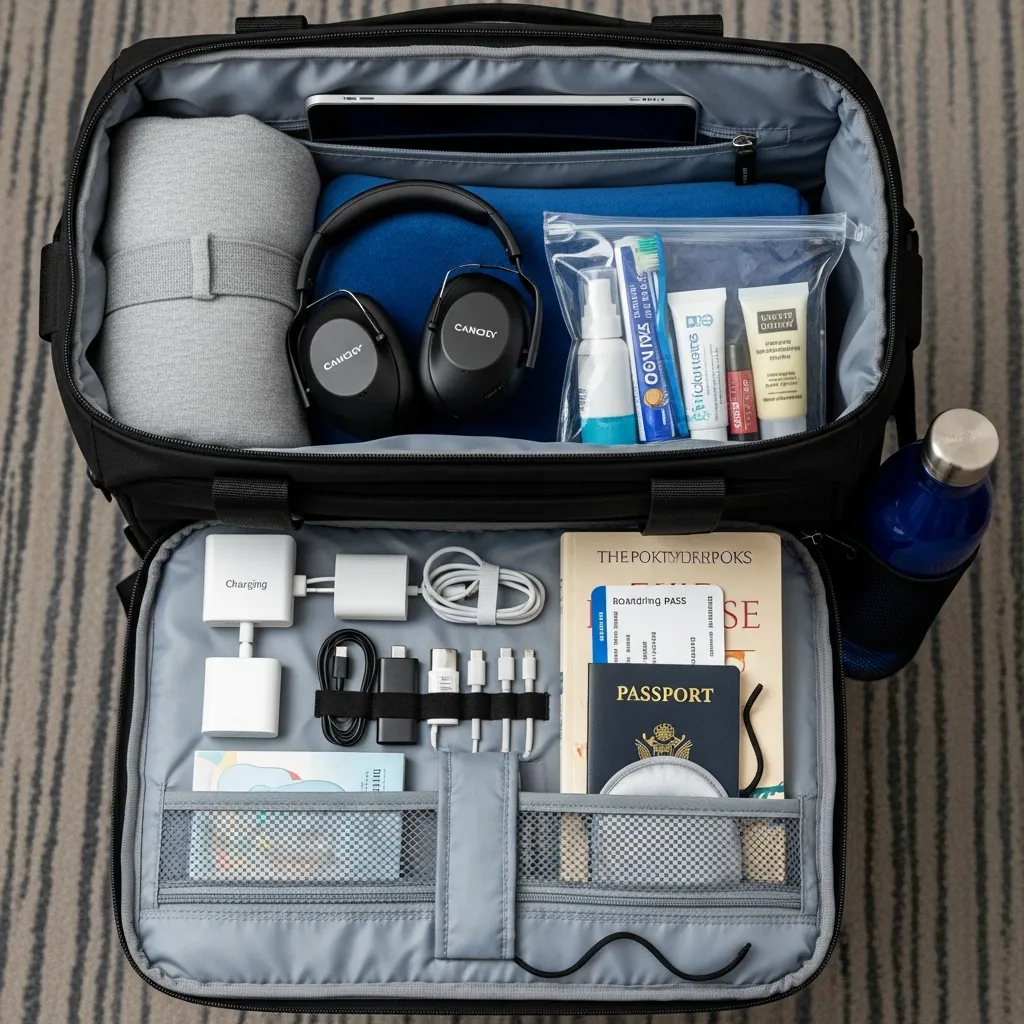
A thoughtful personal item packing list is about access, not just inventory. Everything you need mid-flight should be reachable without opening the overhead bin.
Within-seat access essentials:
- Neck pillow and eye mask
- Earbuds or headphones
- Phone, tablet, or e-reader with downloaded content
- Charging cable and power bank
- Lip balm and hand cream
- Snacks (nut packets, dried fruit, granola bars)
- Reusable water bottle (filled after security)
- A light layer (scarf or zip-up)
Organization strategies: Use a small pouch for toiletries, a tech organizer for cables and devices, and a zippered inner pocket for documents and valuables. Packing cubes work well for keeping a change of clothes compressed and accessible.
Smart travel accessories that maximize personal item space include slim, flat power banks, cable organizers that double as cord holders, and collapsible water bottles that compress when empty.
Smart Travel Accessories for Enhanced Comfort
Smart travel accessories go beyond the basics and address specific comfort pain points on long-haul flights.
Compression wear beyond socks: Compression leggings extend circulation support up through the thigh, making them a solid alternative to separate socks for those prone to heavy leg fatigue. Some travel-specific leggings incorporate compression panels directly.
Portable amenity kits: Some travelers build their own—a small zip pouch containing a sleep mask, ear plugs, a dental kit, and a few skincare essentials. This approach lets you customize based on your specific needs rather than paying a premium for branded kits with items you won’t use.
Multi-functional travel gear: A packing cube that converts into a pillow, a jacket with a built-in neck pillow compartment, or a scarf with a hidden pocket—these products solve multiple problems without adding extra items to your carry-on.
Ergonomic support: A small inflatable lumbar cushion supports the lower back, which airplane seats rarely do adequately. Foot hammocks that hook under the tray table reduce leg fatigue on seats without under-seat foot rests.
Flight Booking Guide: How Seating Affects What You Wear
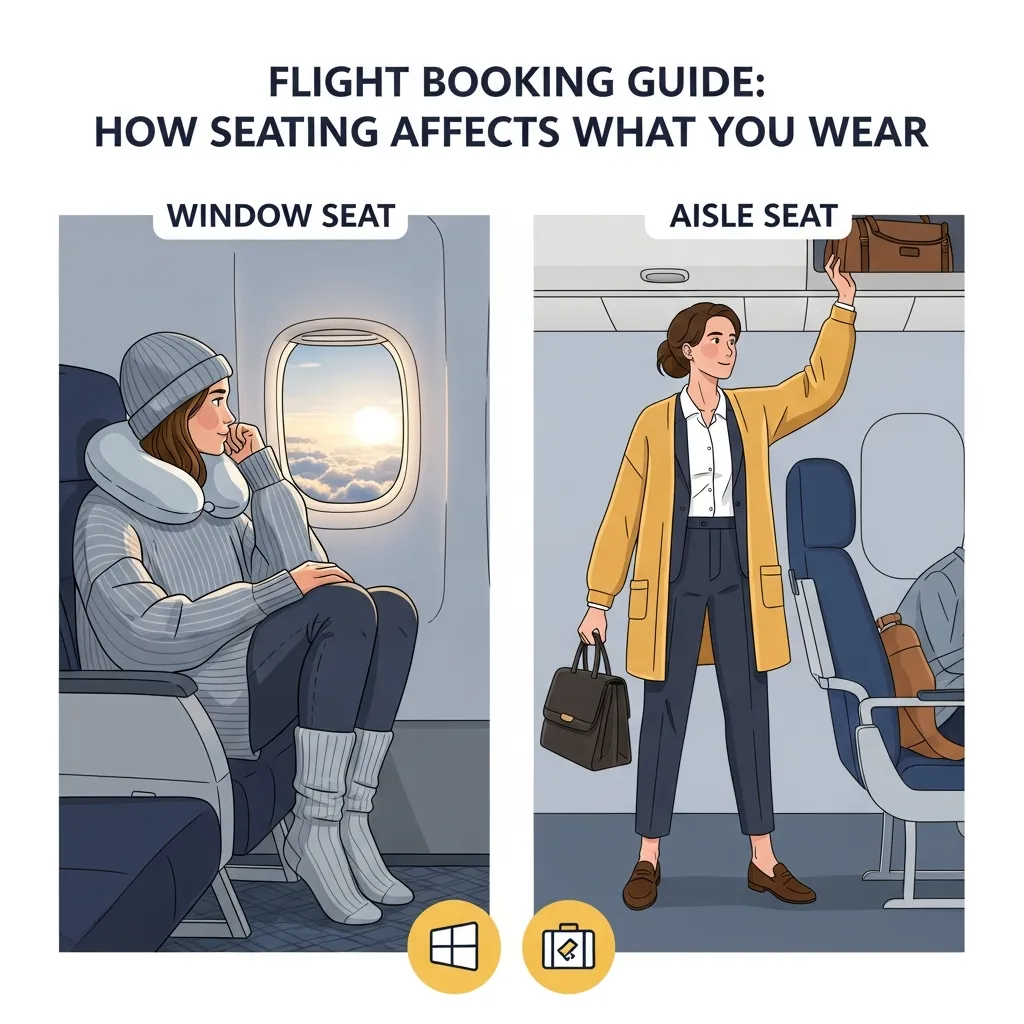
A Flight Booking Guide focused purely on fares misses one of the most impactful comfort variables: seat selection. Where you sit changes how you dress.
Aisle seats give you easier access to the bathroom and more freedom to stretch without disturbing neighbors. Aisle passengers benefit from clothing with no protrusions—avoid bags or belts that might snag on the cart.
Window seats are preferred for sleeping, since you control the shade and have a wall to lean against. Passengers in window seats benefit from an extra layer within reach, as window areas can get colder at cruising altitude.
Premium economy versus economy: Premium economy seats offer more legroom, wider recline angles, and better overall space. In premium economy, you have more room to move, which makes circulation less of a concern—though compression socks remain a good idea regardless.
Rest preparation: Adjusting your sleep schedule a few days before a long flight, wearing clothes you can actually sleep in, and timing your meals to the destination time zone all contribute to how functional you feel on landing.
Final Thoughts: Dress for Where You’re Going, Not Just Where You Are
What to wear on a long flight is ultimately a balancing act between comfort and practicality. The best long-haul flight outfit is breathable, layered, easy to adjust, and kind to your circulation. Shoes slip off without effort. Waistbands flex as your body shifts over hours in the air.
Beyond clothing, airplane travel essentials like compression socks, a solid travel toiletries packing kit, and smart travel accessories fill the gaps that great clothing alone can’t cover. A well-organized personal item packing list means you spend less time rummaging and more time resting.
Style doesn’t have to disappear. Tailored joggers, a merino cardigan, and clean slip-on sneakers look sharp at the airport and feel like pajamas in the air. That’s the sweet spot—and with a little preparation, it’s entirely achievable.
Frequently Asked Questions
What fabric is best to wear on a long flight?
Merino wool, bamboo, and modal are the best fabrics for long flights. These materials are breathable, moisture-wicking, and temperature-regulating. Merino wool, in particular, performs well across a wide range of cabin temperatures and resists odor buildup during extended wear. Avoid cotton as a base layer—it retains moisture—and stiff synthetic blends that don’t breathe well.
Should I wear compression socks on long flights?
Yes. Compression socks are strongly recommended for any flight over six hours. Compression socks for long flights apply graduated pressure to the lower legs, which promotes blood circulation and reduces the risk of swelling and deep vein thrombosis (DVT). A compression level of 15–20 mmHg suits most travelers well.
Is it okay to wear pajamas on a long flight?
Pajamas are technically fine, particularly on overnight long-haul flights where many passengers prioritize sleep. However, purpose-built travel clothing—like moisture-wicking joggers and soft jersey tops—offers the same comfort level with more versatility on arrival. If wearing pajamas, opt for a neat style rather than loose, printed sleepwear.
What shoes are best for long flights?
The best shoes for long flights are slip-on styles that accommodate foot swelling. Knit or canvas slip-on sneakers, leather loafers with cushioned insoles, and lightweight moccasins are all solid choices. Avoid heels, boots with laces, and shoes with stiff toe boxes. Wearing thick, comfortable socks underneath is advisable if you plan to walk the aisle without shoes.
How many layers should I wear on a plane?
Three layers are ideal for long flights: a moisture-wicking base layer, a mid-layer like a zip-up hoodie or cardigan, and a packable outer layer or lightweight jacket. This approach lets you adjust to cabin temperature fluctuations without being over- or under-dressed at any point during the flight.
Can I wear a dress or skirt on a long flight?
Yes. A loose midi dress, wrap dress, or wide A-line skirt can be among the most comfortable options for long flights. These styles eliminate waistband pressure entirely and allow for excellent airflow. Pair with a slip or leggings underneath for warmth and comfort when moving through the cabin.
What should I avoid wearing on long flights?
Avoid tight jeans, structured trousers with stiff waistbands, lace-up boots, high heels, heavy belts, and non-breathable synthetic fabrics. These restrict circulation, trap heat, and become increasingly uncomfortable over time. Strong perfumes and colognes are also worth avoiding—confined cabin air makes scents more intense for everyone on board.
Is it better to wear loose or tight clothing on flights?
Loose is generally better, but not without limits. Extremely baggy clothing bunches in seats and can interfere with seatbelt positioning. The ideal is a relaxed, flexible fit—not skin-tight, but not so loose that it becomes cumbersome. Stretchy, form-following fabrics offer the best of both: freedom of movement without excess bulk.
Should I change clothes during a long flight?
On flights over 10–12 hours, changing into fresh clothes mid-flight—particularly a clean top—can significantly refresh your comfort levels. Include a change of clothes in your personal item packing list for this reason. At minimum, having a fresh pair of socks to put on mid-flight makes the second half noticeably more pleasant.
What accessories help with comfort on long flights?
The most impactful comfort accessories for long flights include compression socks, a quality neck pillow (or a travel pillow alternative like the Trtl Pillow), a lightweight scarf for temperature control, a sleep mask, and noise-canceling headphones or earplugs. A hydrating facial mist and lip balm from your travel toiletries packing kit also help combat dry cabin air.
How should I pack my personal item for a long flight?
Organize your personal item packing list by access priority. Items needed mid-flight—snacks, headphones, lip balm, a light layer, your phone—should be in the top or outer pockets. Documents and valuables go in an inner zipped pocket. Use a small pouch for toiletries and a tech organizer for cables to eliminate rummaging. Keep the bag compact enough to fit under the seat in front of you.
What travel toiletries should I keep accessible during a long flight?
Your in-flight travel toiletries packing pouch should include a facial mist, rich moisturizer, lip balm, hand cream, eye drops, breath mints, and face wipes. For flights over 10 hours, add a travel-size toothbrush and toothpaste. Keep this pouch in an outer pocket of your personal item so it’s reachable without disturbing other passengers.



Leave a Reply