


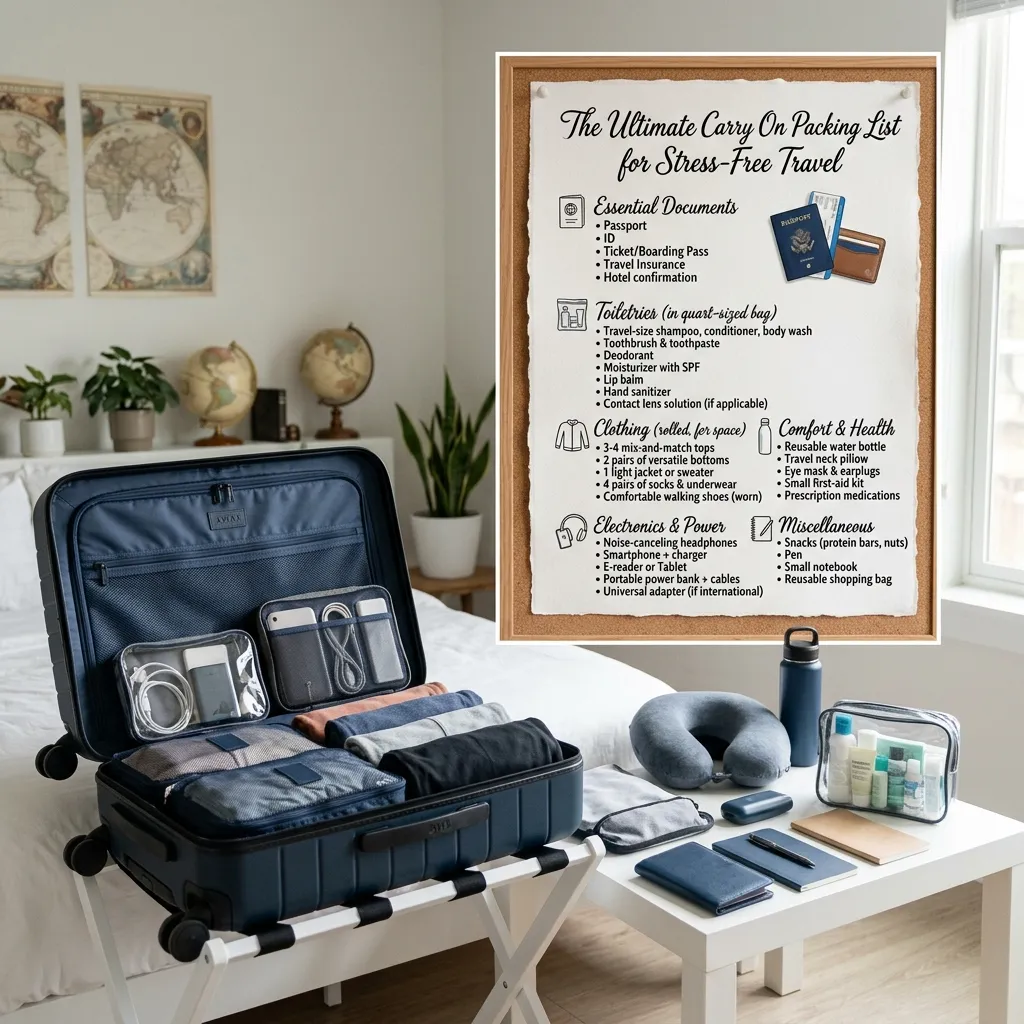
A great Carry On Packing List covers documents, electronics, comfort items, personal care, and travel safety accessories. Pack travel-sized liquids in a clear quart-sized bag, keep valuables and medication on you, and use packing cubes to maximize space. The goal: everything you need within arm’s reach, nothing you don’t.
Few things shape a trip more than what you pack—and what you forget. A thoughtful Carry On Packing List saves you from airport stress, lost luggage panic, and that sinking feeling when you realize your charger is in a suitcase somewhere over the Atlantic.
Traveling light isn’t just about avoiding checked bag fees (though that’s a nice bonus). It means faster movement through airports, fewer items to track, and total control over your most important belongings. When you nail your Carry On Packing List, you breeze past baggage claim while everyone else waits.
This guide walks you through everything that belongs in your bag. We’ll cover core must-haves, Airplane Travel Essentials, Long Haul Flight Essentials, and Travel Safety Accessories. You’ll also get practical Packing Tips for Air Travel, plus the rules and common mistakes that trip up even experienced flyers. By the end, you’ll have a Carry On Packing List you can rely on for any journey.
Why Does a Well-Planned Carry On Packing List Matter?
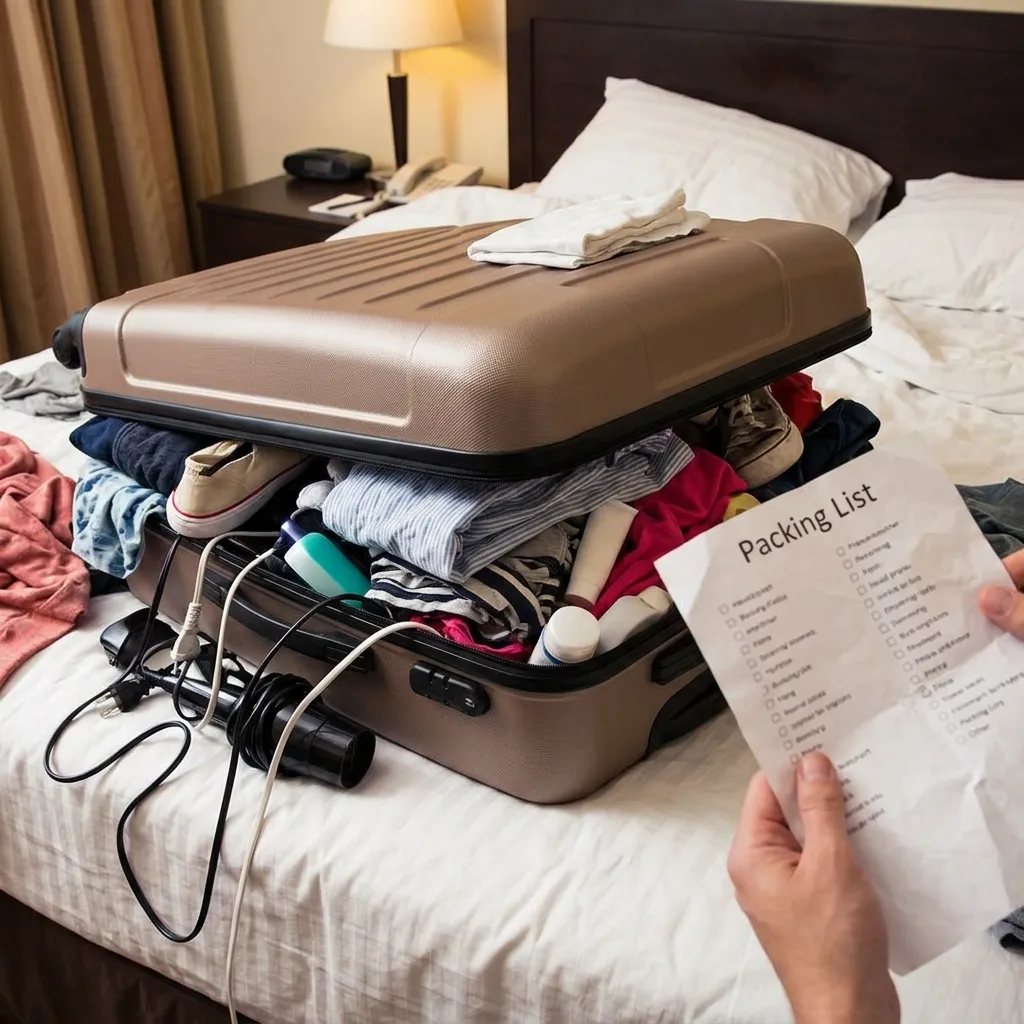
A smart Carry On Packing List does more than keep you organized—it protects you. Airlines mishandle millions of bags every year, and a checked bag can vanish for days. When your essentials live in your carry-on, a delayed suitcase becomes a minor annoyance instead of a trip-ruining disaster.
Packing light also speeds up every part of your journey. You skip the check-in line, avoid the baggage carousel, and stay mobile during tight connections. A focused Carry On Packing List forces you to choose only what you truly need, which makes packing faster and travel calmer.
Building Your Core Carry On Packing List: The Absolute Must-Haves
Start your Carry On Packing List with the items you cannot afford to lose. These belong with you at all times, never in checked luggage.
Documents and Valuables
Your travel documents top every Carry On Packing List. Forgetting them can end a trip before it begins.
- Passport (and visa, if required)
- Boarding passes or tickets (digital and a printed backup)
- Wallet with cash, cards, and ID
- Medication in original, labeled containers
- Travel insurance details and key phone numbers
Electronics
Modern travel runs on devices, so these items earn a permanent spot on your Carry On Packing List.
- Smartphone and charging cable
- Portable power bank (charged before you leave)
- Headphones or earbuds
- Universal travel adapter for international trips
- Tablet, e-reader, or laptop if you need one
Comfort Essentials
Comfort items separate a rough flight from a restful one. Add these to your Carry On Packing List for any trip over a couple of hours.
- Travel pillow for neck support
- Eye mask to block cabin lights
- Earplugs or noise-canceling headphones
Airplane Travel Essentials: Maximizing Comfort and Convenience
Beyond the basics, certain Airplane Travel Essentials make the hours in the air far more pleasant. These items keep you fresh, entertained, and fed.
Personal Care
Recycled cabin air dries out your skin fast, so pack these Airplane Travel Essentials within easy reach.
- Travel-sized toiletries (under 3.4 ounces each)
- Hand sanitizer and disinfecting wipes
- Lip balm and moisturizer
- Toothbrush and travel toothpaste for long flights
Entertainment
Seatback screens fail and Wi-Fi drops out, so bring your own entertainment.
- A book or e-reader
- Downloaded movies, shows, or podcasts
- A travel journal or notebook
Snacks and Hydration
Airport food is pricey and airplane meals are unpredictable. Smart Airplane Travel Essentials include your own food and water.
- Reusable water bottle (empty through security, fill at a fountain)
- Healthy snacks like nuts, granola bars, or dried fruit
- Gum or mints to ease ear pressure during takeoff and landing
What Are the Best Long Haul Flight Essentials?
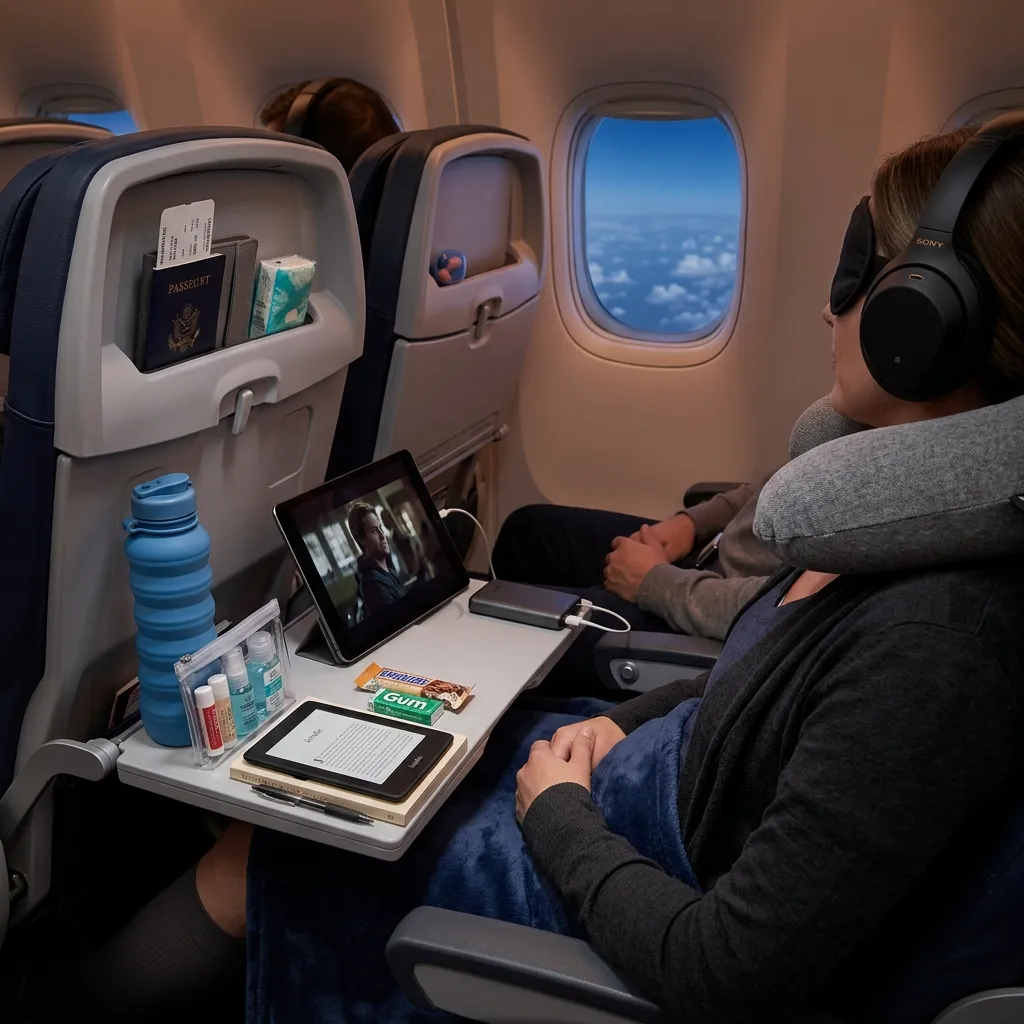
Flights over six hours demand extra planning. The right Long Haul Flight Essentials help you arrive rested instead of rumpled.
A Change of Clothes
Pack a fresh set in case of spills, delays, or lost checked bags. These Long Haul Flight Essentials make a huge difference on overnight routes.
- Clean underwear and socks
- A light, comfortable outfit
- A t-shirt to change into before landing
Warmth
Plane cabins run cold. Add layers to your Long Haul Flight Essentials so you can adjust on the fly.
- A scarf or wrap that doubles as a blanket
- A light jacket or hoodie
Foot Comfort
Long sitting causes swelling, so prioritize these Long Haul Flight Essentials.
- Compression socks to improve circulation
- Slip-on shoes for easy security checks and in-flight comfort
Travel Safety Accessories: Protecting Yourself and Your Belongings
The right Travel Safety Accessories give you peace of mind. They guard your valuables and prepare you for small emergencies.
Anti-Theft Measures
Pickpockets target tourists, so smart Travel Safety Accessories help you stay one step ahead.
- RFID-blocking wallet to protect card data
- Small luggage locks for zippers
- A cross-body bag that’s hard to snatch
A Basic First-Aid Kit
A compact kit handles minor scrapes and aches. These Travel Safety Accessories belong in every Carry On Packing List.
- Adhesive bandages and antiseptic wipes
- Pain relievers and any personal medications
- Motion sickness tablets
Personal Safety Devices
A few small Travel Safety Accessories can make a real difference in an emergency.
- A whistle to call for help
- A mini flashlight for power outages or dark spaces
Smart Packing Tips for Air Travel: Space-Saving and Organization
Knowing what to pack is half the battle. These Packing Tips for Air Travel help you fit it all without overstuffing your bag.
Rolling vs. Folding: Which Wins?
Rolling clothes saves space and reduces wrinkles for casual items like t-shirts and jeans. Folding works better for structured pieces like blazers. Most travelers find that a mix of both makes the smartest use of a Carry On Packing List.
Use Packing Cubes
Packing cubes are the single best tool among all Packing Tips for Air Travel. They compress your clothes, group items by type, and turn a chaotic bag into neat, findable sections. When security needs a look inside, you’ll thank yourself.
Keep Essentials Accessible
Place items you’ll need mid-flight—headphones, snacks, medication, a charger—in an outer pocket or at the top of your bag. One of the best Packing Tips for Air Travel is simple: the more often you’ll use something, the easier it should be to grab.
Balance the Weight
Distribute heavier items, like books and electronics, near the base of your bag. This keeps your carry-on stable and easier to lift into the overhead bin.
Special Considerations for Your Carry On Packing List
A few categories come with rules. Get these right and you’ll move through security without delays.
Medication
Always keep medication in your Carry On Packing List, in original labeled containers. Pack a few extra days’ worth in case of delays. Prescription liquids over 3.4 ounces are allowed, but tell the security officer at screening.
Liquids, Aerosols, and Gels (LAGs)
In the United States, the TSA’s 3-1-1 rule governs liquids: containers of 3.4 ounces (100 milliliters) or less, all fitting in one clear quart-sized bag, one bag per passenger. Anything larger must go in checked luggage.
Valuable Items
Jewelry, cash, electronics, and important documents should never go in checked bags. Keep these high-value items in your Carry On Packing List, where they stay under your control.
Common Carry On Packing List Mistakes to Avoid
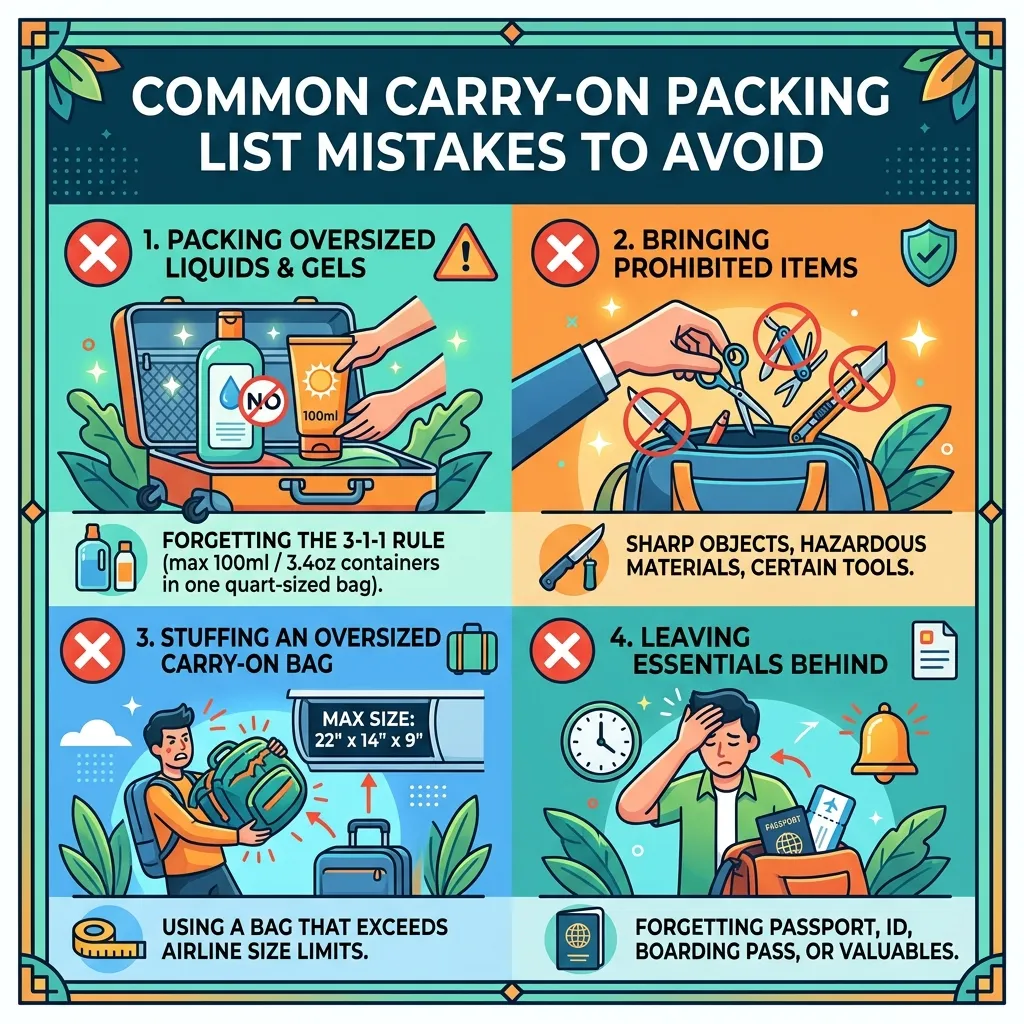
Even seasoned travelers slip up. Watch out for these errors when building your Carry On Packing List.
- Overpacking. Stuffing your bag makes it heavy, hard to close, and a nightmare to organize. Pack only what you’ll realistically use.
- Forgetting essential documents. Double-check your passport, tickets, and ID before you leave home. No item matters more on your Carry On Packing List.
- Ignoring airline restrictions. Every airline sets its own size and weight limits for carry-ons. Check the rules before you pack to avoid surprise fees at the gate.
Your Path to a Stress-Free Carry On Packing List
A great trip starts long before you reach the airport. When you build your Carry On Packing List with intention—covering documents, Airplane Travel Essentials, Long Haul Flight Essentials, and Travel Safety Accessories—you give yourself the gift of calm, confident travel.
Start with the must-haves, layer in comfort and safety, and apply smart Packing Tips for Air Travel to fit it all in one bag. Print this Carry On Packing List or save it to your phone, then customize it for your next destination. With the right preparation, you’ll spend less time worrying and more time enjoying the journey ahead.
Frequently Asked Questions
What are the most important items on a Carry On Packing List?
Your passport, tickets, wallet, medication, phone, and charger are the most critical items. These belong in your carry-on at all times because losing them can disrupt or end your trip. Everything else is replaceable; these are not.
How can I make my Carry On Packing List lighter?
Choose versatile clothing you can mix and match, pack travel-sized toiletries, and limit yourself to one pair of backup shoes. Use packing cubes to compress items and leave behind anything you can buy at your destination.
What are the liquid restrictions for a Carry On Packing List?
The TSA’s 3-1-1 rule allows liquid containers of 3.4 ounces (100 milliliters) or less, all fitting inside one clear quart-sized bag, with one bag per passenger. Larger liquids must go in checked luggage.
Can I bring medication in my Carry On Packing List?
Yes. Always pack medication in your carry-on, in original labeled containers, with a few extra days’ supply. Prescription liquids over 3.4 ounces are permitted, but you should notify the security officer during screening.
What are some good Airplane Travel Essentials for long flights?
A travel pillow, eye mask, earplugs, noise-canceling headphones, lip balm, and a reusable water bottle top the list. Downloaded entertainment and healthy snacks also make long flights far more comfortable.
Are Travel Safety Accessories really necessary?
For most travelers, yes. An RFID-blocking wallet, luggage locks, and a basic first-aid kit add little weight but offer real protection. They’re especially worthwhile in busy tourist destinations where theft is common.
What are the best Packing Tips for Air Travel?
Roll casual clothes to save space, use packing cubes to stay organized, keep frequently used items accessible, and balance heavier objects near the base of your bag. These habits make any Carry On Packing List easier to manage.
How can I fit more into my Carry On Packing List?
Wear your bulkiest items—like a jacket and boots—on the plane, fill shoes with socks, and use compression packing cubes. Roll soft clothing tightly and tuck small items into every gap.
What should I never put in my checked luggage but always in my Carry On Packing List?
Never check your passport, cash, jewelry, electronics, medication, or important documents. Keep all valuables and irreplaceable items in your carry-on, where they stay with you at every step.
Should I roll or fold clothes for a carry-on?
Roll casual items like t-shirts and jeans to save space and cut down on wrinkles. Fold structured pieces like blazers. A combination of both methods works best for most carry-ons.
How early should I prepare my Carry On Packing List?
Start at least a day or two before departure. This gives you time to charge electronics, buy travel-sized toiletries, refill medication, and confirm your airline’s size and weight rules without last-minute stress.
Do compression socks really help on long flights?
Yes. Compression socks improve blood circulation in your legs during long periods of sitting, which reduces swelling and lowers the risk of discomfort on long-haul flights. They’re a small but valuable addition to your Carry On Packing List.



Leave a Reply