


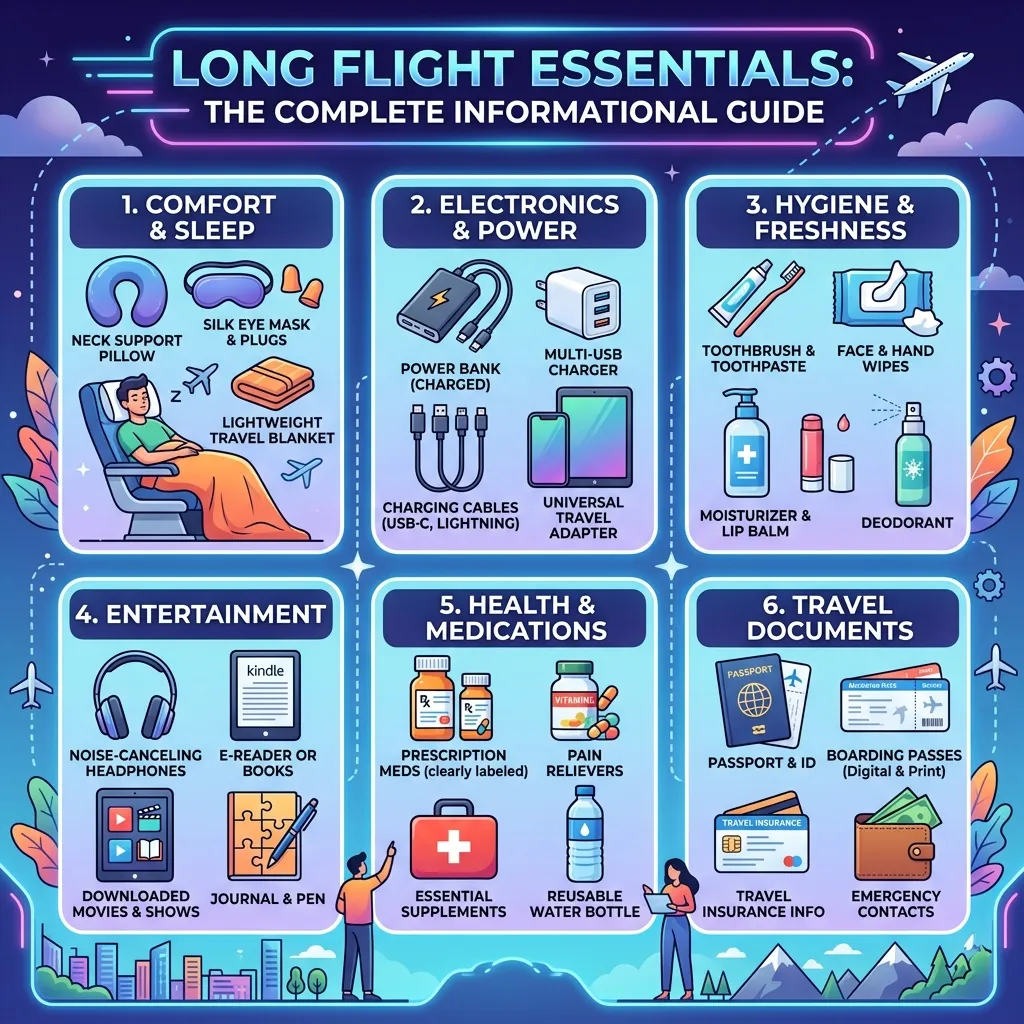
Long Flight Essentials help travelers stay comfortable, organized, and calm in the air, turning a tiring trip into a smoother experience with better sleep, hydration, and arrival energy.
Why Long Flight Essentials Matter
These essentials are not just about comfort. They shape how your body feels, how your mind copes with delays, and how quickly you recover after landing. A long journey can make small problems feel bigger, so these essentials reduce friction before it starts. When your neck hurts, your battery dies, or your water runs out, the entire trip feels harder than it should. That is why the smartest travelers treat these essentials as a system, not a random packing habit. If you prepare well, your seat becomes easier to handle, your sleep becomes more likely, and your mood stays steadier. These essentials also support a more confident travel experience because you spend less time reacting and more time enjoying the journey.
The real value of these essentials is psychological as much as physical. A traveler who feels prepared usually feels calmer, and calm travelers make better decisions at the airport and on the plane. These essentials lower anxiety by giving you small wins: a charged phone, a soft layer, a clean tissue, a refillable bottle, and a backup snack. Those details seem minor, but together they create a sense of control. That sense of control matters on any journey, especially when schedules shift or the cabin feels crowded. These essentials also help you protect your energy for what comes after the flight, whether that is work, sightseeing, family time, or a connection to another destination.
Build Your Mindset Before You Pack
The best travel routines start with the right mindset. Before you pack anything, think about the flight in stages: check-in, security, boarding, the first hour in the air, the middle stretch, the final descent, and the arrival. These essentials should support each stage. For example, the first hour often decides how settled you feel, so easy-access items matter more than fancy items. During the middle stretch, sleep support and entertainment matter more. Near landing, freshening items and chargers become useful again. When you pack with the journey timeline in mind, these essentials become practical tools instead of extra clutter. That approach also helps you avoid overpacking, because every item must earn its place.
Carry On Strategy That Makes Long Flights Easier
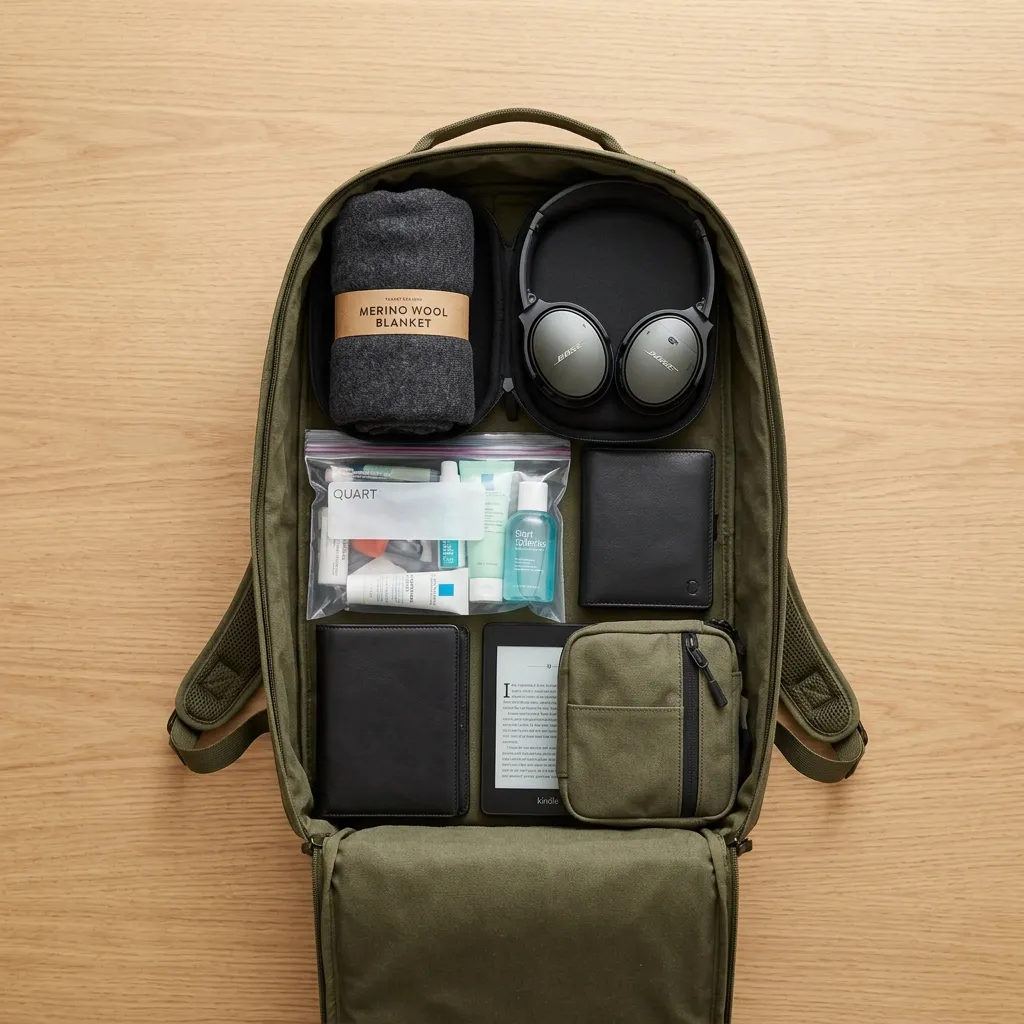
A strong carry-on is the backbone of these essentials. Your bag should hold the items you need most often, because reaching overhead or digging under a seat wastes energy. These essentials work best when your carry-on has simple internal structure: one pouch for tech, one for hygiene, one for snacks, one for documents, and one for comfort items. This layout keeps the essentials visible and easy to grab. A bag with too many loose items creates frustration, while a well-organized carry-on creates momentum. These essentials should also include a small amount of flexibility, because every airline and seat layout is different. The goal is not perfection. The goal is easy access and low stress.
Packing your carry-on with these essentials means choosing items that solve multiple problems at once. A scarf can become warmth, a pillow helper, or a privacy layer. A power bank protects your phone and your boarding pass. Compression socks support circulation and comfort. The best carry-on Travel Accessories for Women and men alike are lightweight, versatile, and easy to clean. When possible, choose flat items over bulky ones, because cabin space is limited. These essentials are most effective when they fit neatly into a system you can repeat for every trip. That repetition builds confidence, and confidence saves time at every stage of travel.
A Simple Carry-On Breakdown
| Category | What to Include | Why It Helps |
|---|---|---|
| Documents | Passport, ID, boarding pass, insurance copy | Keeps travel moving |
| Tech | Phone, charger, power bank, headphones | Supports work and entertainment |
| Comfort | Neck support, eye mask, blanket layer | Improves rest |
| Hygiene | Lip balm, wipes, toothbrush, tissues | Helps you feel fresh |
| Food | Snacks, electrolytes, gum | Prevents energy dips |
This kind of table makes these essentials easier to remember because it turns a vague idea into a clear packing pattern. Keep the table in mind as a repeatable checklist rather than a one-time rule. These essentials become much easier to manage when every item has a category and a purpose.
Sleep Support in the Air
Sleep is one of the biggest reasons travelers look for these essentials in the first place. A long flight can make rest difficult, but the right setup improves your odds. These essentials for sleep usually include a supportive neck pillow, an eye mask that blocks light, soft earplugs or noise-canceling headphones, and a layer for changing cabin temperatures. A seat is not a bed, so comfort must be created through small adjustments. The body sleeps better when the head is stable, the light is reduced, and the mind is not constantly scanning for discomfort. These essentials help create those conditions before you even close your eyes.
Sleep strategy matters because it affects how the flight feels and how the destination feels after landing. These essentials should help you create a mini bedtime routine in the cabin. Clean your face, apply lip balm, take off shoes if appropriate, lower screen brightness, and settle into a consistent position. If you travel across time zones, these essentials can also support a slow shift into the new schedule by helping you rest at the right time rather than whenever you feel exhausted. It is less about forcing sleep and more about creating the possibility of sleep. That subtle shift makes a big difference on overnight and ultra-long routes.
Hydration and Food Planning
Hydration is one of the most overlooked Long Flight Essentials, yet it can change the whole experience. Cabin air is dry, and dehydration often shows up as fatigue, headache, or irritability. These essentials should therefore include a reusable bottle that you can refill after security, plus a plan for sipping water regularly instead of waiting until you feel thirsty. It is also helpful to reduce excess caffeine and alcohol because both can make you feel worse later. The body performs better when it has a steady flow of water, not an emergency bottle near the end of the journey. These essentials make hydration easier by reducing the effort required to remember it.
Food is another major part of these essentials. Many travelers feel bad because they eat too little, eat too heavily, or rely only on airport snacks. A better plan is to pack small foods that are easy to digest and easy to portion. Think nuts, dried fruit, crackers, granola bars, or other approved snacks that fit your needs. These essentials should also account for timing, because eating a light meal at the wrong moment can make sleep harder. The goal is stable energy. When your food and hydration are planned well, these essentials help you avoid the crash that often arrives halfway through a long route.
Technology and Entertainment That Save Sanity
Entertainment is more than a way to pass time. It is a core part of these essentials because it protects your mood during the long middle hours of the journey. Download movies, music, podcasts, ebooks, and offline maps before leaving home, because in-flight internet is not always reliable. These essentials should also include charging cables, a compatible adapter if you are crossing borders, and a power bank that meets airline rules. Nothing creates panic faster than a dead battery and a long delay. When your devices are ready, your attention has somewhere to go, and the flight feels shorter. These essentials give you control over boredom, which is one of the biggest enemies of comfort.
The smartest technology choices in Long Flight Essentials are simple and dependable. A good pair of headphones can make a crowded cabin feel much smaller. A compact phone stand can turn a tray table into a usable media space. A small cable organizer keeps cords from tangling and getting dirty. The best Long Flight Essentials for tech are not the most expensive ones; they are the ones you can use without thinking. That is especially important when the cabin is dark, the seat belt sign is on, or your hands are full. The fewer decisions you make in flight, the more energy you keep for arrival.
Personal Care and Freshness
Freshness is one of the most emotionally powerful these essentials because feeling clean changes how you think. A long flight can make skin dry, lips chapped, and clothing feel stale, so a small hygiene kit can improve confidence in a major way. These essentials in this category usually include tissues, wet wipes, hand sanitizer, lip balm, moisturizer, toothbrush, toothpaste, deodorant, and maybe a simple face mist if you prefer one. You do not need a large toiletry bag. You need a few dependable items that help you reset during the flight. These essentials work best when they fit in a pouch you can open quickly and close just as fast.
Freshness also supports social comfort. After a long stretch in a plane seat, many travelers feel mentally foggy or self-conscious. These essentials reduce that feeling by making it easy to freshen up before landing or during a bathroom break. A quick wipe of the face, a sip of water, and a touch of lip balm can make you feel more prepared for immigration, a hotel check-in, or a meeting. These essentials are not vanity items; they are confidence items. They help you arrive feeling more human, and that matters when the next part of the journey begins immediately after the flight.
Clothing Layers and Seat Comfort
What you wear is a major part of Long Flight Essentials because clothing affects circulation, temperature, and sleep. The best flight outfit is soft, non-restrictive, and easy to layer. These essentials should include a light top layer or scarf because cabin temperatures can change quickly. Shoes should be easy to remove without creating stress. Fabrics that breathe often feel better over many hours than clothes that look stylish but trap heat. These essentials should also consider movement, because your body needs a little room to shift position, stretch, and stay comfortable. The less your clothing fights your body, the easier the flight feels.
Seat comfort also depends on the small tools you bring. These essentials can include a lumbar cushion, a seat pad, or a travel blanket if your airline and luggage space allow it. Some travelers also benefit from compression socks, which may help support circulation during long periods of sitting. The point is not to turn the cabin into a bedroom. The point is to reduce the physical irritation that builds over time. These essentials are successful when you stop noticing your seat every ten minutes. That kind of quiet comfort is what makes a long flight feel manageable instead of exhausting.
Accessibility and Inclusive Planning
Accessible Travel is a vital part of Long Flight Essentials because every traveler deserves comfort that fits their body and needs. Mobility, sensory sensitivity, chronic conditions, vision needs, hearing support, medication timing, and fatigue all shape what a traveler should pack. These essentials should be customized, not copied from a generic list. For some travelers, that means extra medication, a medical document pouch, or a seating support item. For others, it means arranging assistance through the airline, choosing an aisle seat, or using tools that reduce sensory overload. These essentials work best when they respect real differences instead of assuming one travel style fits everyone.
Planning for accessibility also improves confidence. These essentials may include a note with emergency contacts, translated medical information, assistive device batteries, or a plan for receiving help during boarding and arrival. The most important part is to remove avoidable uncertainty. When a traveler knows where the important items are and what support is available, the flight becomes less intimidating. These essentials should make the journey easier to navigate, not harder. That principle helps first-time travelers, older travelers, disabled travelers, and anyone whose needs are different from the standard checklist.
What to Pack for Different Travel Styles
Not every journey needs the same version of these essentials. A business traveler may focus on laptop access, sleep management, and clothes that arrive wrinkle-resistant. A family traveler may prioritize snacks, wipes, chargers, and quiet entertainment. A solo traveler may want security, organization, and comfort items that reduce stress. These essentials should reflect the actual purpose of the trip. When you match the packing list to your travel style, you avoid carrying unnecessary items and gain more room for the things that matter. That is the smartest way to balance comfort and efficiency. These essentials should feel personal, not generic.
The same idea applies to weather and destination. If you are landing somewhere cold, a warmer layer belongs in Long Flight Essentials. If you are arriving somewhere humid, breathable clothing matters more. If you expect a long customs line, easy-access documents become essential. These essentials should also account for how you feel on arrival. Some travelers want to go straight to a meeting, while others plan to shower, sleep, or explore immediately. That means the right packing list is often built backward from the first three hours after landing. When you think that way, these essentials become a bridge between the flight and the life waiting on the other side.
Smart Shopping Without Overbuying
It is easy to spend too much on these essentials because travel marketing makes every product sound necessary. A smarter approach is to buy tools that solve a real problem you have already experienced. If your neck always hurts, invest in support. If your lips always dry out, buy a reliable balm. If you hate tangled cords, get a cable pouch. These essentials should earn their place through usefulness, not hype. The most effective items are often simple and durable. A traveler who knows their own habits can usually build a better kit than someone who buys every trending product. These essentials should feel practical, not trendy.
Budget matters too. These essentials do not have to be expensive to work well. Many low-cost items perform beautifully when chosen carefully. The real test is whether the item makes the flight easier without creating extra bulk or stress. A lightweight bottle, a compact eye mask, or a small organizer can be more valuable than a premium gadget you barely use. These essentials should be easy to replace, easy to pack, and easy to trust. That combination is what makes travel gear worth carrying on every future trip.
A Helpful Table for First-Time Flyers
| Need | Good Long Flight Essentials Choice | Why It Matters |
|---|---|---|
| Sleep | Eye mask, neck support, earplugs | Helps you rest |
| Hydration | Refillable bottle, electrolyte packets | Supports energy |
| Comfort | Scarf, socks, soft layer | Reduces cabin discomfort |
| Hygiene | Wipes, balm, sanitizer | Keeps you feeling fresh |
| Tech | Charger, power bank, headphones | Prevents boredom and stress |
| Documents | Passport, ID, booking copies | Keeps travel smooth |
A table like this is useful because these essentials are easier to remember when they are grouped by need rather than by brand. It also helps you stay focused on function. A strong checklist supports better decisions at home, in the airport, and on the plane.
Building a Repeatable Pre-Flight Routine
The best travelers do not reinvent Long Flight Essentials every time they fly. They use a repeatable routine. The day before departure, charge devices, pack the carry-on, verify documents, and refill small containers. On the day of travel, move the most important items to easy-access pockets. At the airport, finish meals, top up water, and make sure your entertainment is downloaded. Long Flight Essentials become more powerful when your process is simple enough to repeat without stress. Routine saves mental energy, and mental energy matters before a long journey. If you know what goes where, you leave less room for mistakes.
A repeatable routine also helps with anxiety. Long Flight Essentials create a sense of readiness, and readiness reduces last-minute panic. Many travelers feel rushed because they pack in a hurry or forget one important item. A routine fixes that. It tells your brain that the trip is under control. Long Flight Essentials are especially valuable when a flight departs early, arrives late, or requires multiple connections. When your routine is stable, the trip feels less chaotic. That calm usually shows up in the way you board, sit, sleep, and arrive.
Common Mistakes to Avoid
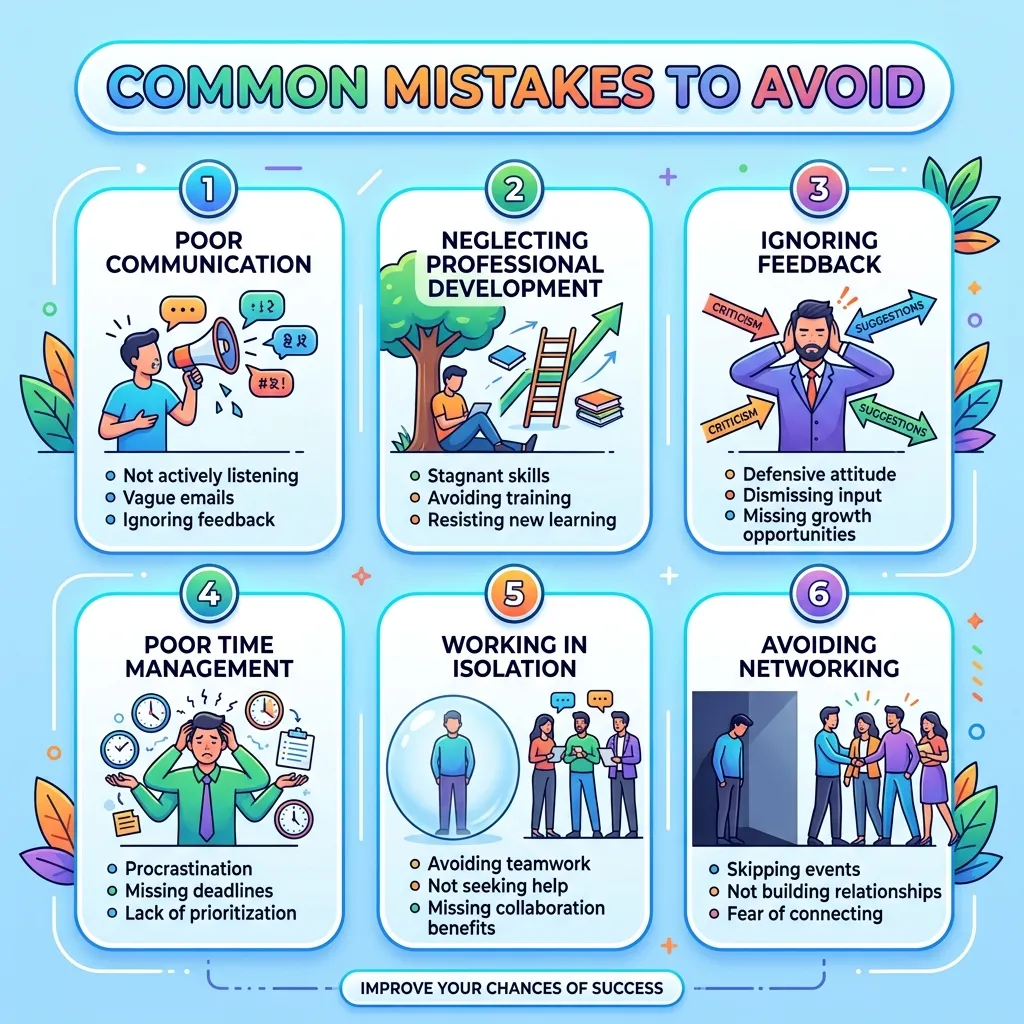
One common mistake is packing too much and then not being able to reach the right items. These essentials should be close at hand, not buried under extras. Another mistake is assuming the plane will provide everything you need. Some airlines offer good kits, but you should never rely on them entirely. These essentials should also avoid heavy objects that add strain without clear value. It is better to bring a few useful items than a crowded bag full of maybes. Overpacking creates its own kind of stress, especially when you move through airports or switch planes.
Another mistake is forgetting that these essentials must work for the full trip, not just the first hour. A great snack does little if you run out of water later. A comfortable pillow is less useful if your phone dies and you cannot access your boarding pass or entertainment. These essentials should support the entire experience from departure to arrival. The more complete your system is, the less likely you are to feel frustrated halfway through the journey. That is the difference between reacting to problems and preventing them.
Conclusion
Long Flight Essentials are really about making travel kinder to your body and mind. When you pack with intention, you give yourself comfort, flexibility, and a much better chance of arriving ready for what comes next. The best Long Flight Essentials are not flashy. They are the simple items that reduce pain, support sleep, protect energy, and keep your routine steady from check-in to landing. A strong plan also helps you travel with more confidence because you are not relying on luck. When the flight gets long, Long Flight Essentials turn the journey into something you can manage calmly and comfortably.
FAQs
1) What are the most important Long Flight Essentials?
The most important Long Flight Essentials are usually a charger, headphones, water bottle, snacks, eye mask, neck support, hygiene items, and travel documents. Start with comfort and access.
2) How do I choose Long Flight Essentials for an overnight flight?
For overnight travel, focus on sleep support first. Long Flight Essentials for this kind of flight should include an eye mask, layers, earplugs or headphones, and a simple cleaning kit.
3) Are Long Flight Essentials different for business travel?
Yes. Business travelers often need Long Flight Essentials that support sleep, organization, and device use, especially if they need to work right after landing.
4) Can Long Flight Essentials help with jet lag?
They can help indirectly. Long Flight Essentials support hydration, rest, and timing, which makes it easier to adjust after landing.
5) What should I keep in my personal item?
Your personal item should hold the most-used Long Flight Essentials: documents, tech, hygiene items, medicine if needed, and anything you want within arm’s reach.
6) How can I avoid overpacking Long Flight Essentials?
Choose items that solve more than one problem. Long Flight Essentials should be lightweight, compact, and truly useful throughout the trip.
7) What are good Long Flight Essentials for first-time flyers?
First-time flyers should prioritize calm and simplicity. Good Long Flight Essentials include water, snacks, a phone charger, a neck pillow, tissues, and a small comfort layer.
8) Do Long Flight Essentials change for different seats?
Yes. Window, aisle, and middle seats all feel different, so Long Flight Essentials may shift based on access, sleep, legroom, and movement needs.
9) How do Long Flight Essentials support accessible travel?
They can support accessible travel by reducing strain, protecting routines, and making important items easy to reach. Long Flight Essentials should always match the traveler’s actual needs.
10) What is the easiest way to remember Long Flight Essentials?
Use the same checklist every trip. Long Flight Essentials become easier to remember when you sort them into comfort, tech, hygiene, documents, and food.



Leave a Reply